AirTags · Volume 8
AirTags Volume 8 — Varieties II: Tile, Chipolo, Pebblebee & Cross-Network Tags
The BLE-only and 'Find My or Google' trackers: Tile's own-network cross-platform line (Mate/Pro/Slim/Sticker, Life360, Amazon Sidewalk, no UWB); Chipolo's one-network-per-SKU architecture (ONE Spot / CARD Spot = Find My; POINT / CARD POINT = Google); Pebblebee's rechargeable variants; the consumer-confusion trap at the heart of this category; and the complete cross-network variety matrix
8.1 About This Volume
Vol 7 surveyed the two ecosystem-native tracker families — the Apple AirTag (locked to iPhone and Apple Find My) and the Samsung Galaxy SmartTag line (locked to a Samsung Galaxy phone and SmartThings Find). Those trackers are designed by the OS maker, run on the OS maker’s crowdsourced infrastructure, and carry UWB for short-range precision homing. They are not the subject of this volume.
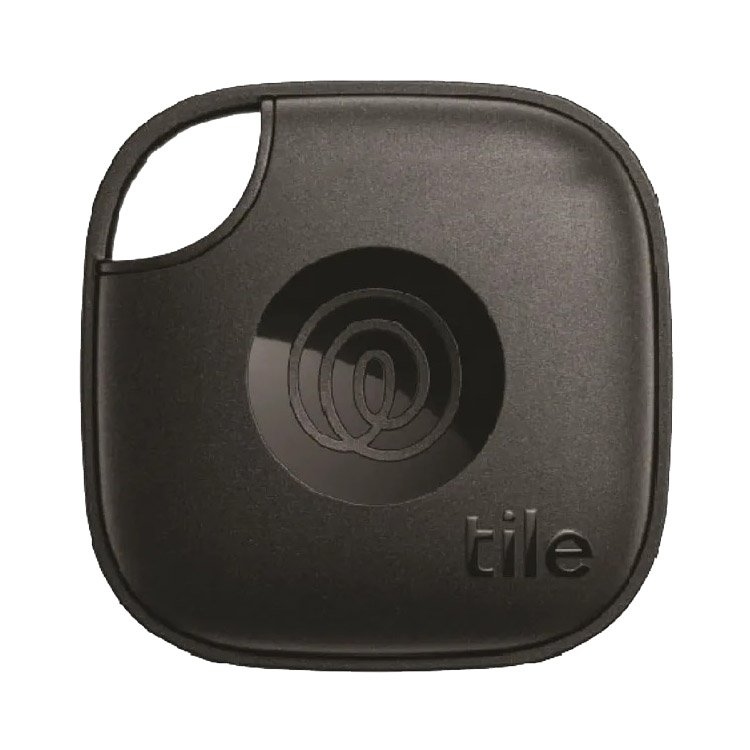
This volume covers the other half of the tracker market: brands that are not owned by a phone-OS company and which therefore must either build their own finding infrastructure or attach themselves to an existing one. The three companies examined here — Tile, Chipolo, and Pebblebee — represent three distinct strategies for solving that problem, and understanding those strategies is the engineering value this volume delivers.
What this volume covers. Section §2 establishes the cross-network category framework and introduces the three finding-network types at play. Section §3 covers Tile — the oldest third-party tracker brand, now owned by Life360, operating a proprietary BLE-only network supplemented by Amazon Sidewalk, and carrying the most controversial anti-stalking posture in the market. Section §4 covers Chipolo — a Slovenian maker that solved the ecosystem problem by offering parallel product lines that attach to different networks, with the crucial constraint that each SKU joins exactly one network and you must choose at purchase. Section §5 covers Pebblebee, whose primary differentiator is rechargeable batteries (USB-C) rather than the coin-cell or sealed-battery designs of every other tracker here. Section §6 surveys no-name / clone Find My accessories. Sections §7–§9 are the synthesis: the master cross-network variety table (§7), the one-network-per-SKU trap (§8), and the three-way battery-architecture tradeoff (§9). Section §10 covers anti-stalking provisions per brand. Section §11 is the buy-decision guide.
What this volume defers. The BLE advertising and ECIES-encrypted offline finding protocol that Chipolo’s Find My tags reuse is fully derived in Vol 2 — not re-derived here, only cross-referenced. The full cross-platform network density comparison (Apple Find My vs Google Find My Device vs Tile vs Samsung SmartThings, by region and by device count) is Vol 9. The UWB theory (the 802.15.4z HRP, angle-of-arrival, two-way ranging) is Vol 3 — none of the trackers in this volume carry UWB, so it does not apply here beyond the one explicit statement that it does not. The operational posture, legal envelope, and anti-stalking posture for both sides (tracker owner and potential victim) are Vol 14.
Spec-sourced. As of 2026-06-25 none of these tags are on the bench. Specification figures — prices, battery ratings, decibel claims, dimensions — are from vendor product pages and are attributed as vendor claims throughout. Prices are approximate at time of writing and subject to change; verify against current vendor pages.^[Tile product information: https://www.tile.com/products. Chipolo product information: https://chipolo.net. Pebblebee product information: https://pebblebee.com. All prices, battery-life claims, and specification figures cited in this volume are from vendor product pages as of mid-2026 unless otherwise noted and should be treated as vendor-stated values, not bench-verified results.]
8.2 The Cross-Network Tracker Category
8.2.1 What “cross-network” means vs ecosystem-native
The item-tracker market divides along a fundamental axis — one this series returns to repeatedly because it is the axis consumers most often misread. Ecosystem-native trackers (Vol 7: AirTag, SmartTag family) are designed and sold by the phone-OS maker; they lock registration to that maker’s cloud account and leverage that maker’s crowdsourced finding network. The AirTag requires an Apple ID; the SmartTag requires a Samsung account. The trade is strong network integration for hard ecosystem lock-in.
Cross-network trackers are built by independent brands. They do not have the luxury of instructing a billion phones to participate in their finding network via an OS update. Their challenge: build a finding infrastructure that is both large enough to be useful and accessible without controlling a phone OS. The three strategies observable in this volume are:
-
Build your own proprietary network (Tile) — recruit opt-in participants through a dedicated app, then augment with third-party infrastructure (Amazon Sidewalk) to extend coverage. Accept that the network will be smaller than Find My but will work on any phone via the Tile app.
-
Adopt an existing ecosystem network (Chipolo, Pebblebee) — design the hardware to satisfy the cryptographic and radio requirements of Apple’s Find My accessory program or Google’s Find My Device partner program, then sell it as a legitimately-badged member of that network. The tag is recognized by the ecosystem as a first-class participant. The cost: the tag can only join one network per SKU.
-
Build nothing (clone tags) — make a device that just broadcasts the Find My BLE payload format; Apple’s network reports it without Apple’s blessing. This works but is unsupported, may violate Apple’s terms of service, and has no official anti-stalking coverage. See §6.
8.2.2 Three finding-network types — BLE-only, Find My, and Google FMD
Every tracker in this volume is BLE-only at the hardware level — no UWB, no GPS, no cellular. The distinguishing variable is which crowdsourced finding network the BLE beacon participates in. Three types are represented here:
Table 1 — Every tracker in this volume is BLE-only at the hardware level — no UWB, no GPS, no cellular. The distinguishing variable is which crowdsourced finding network the BLE beacon participates in. Three types are represented here
| Network type | Infrastructure | Who “sees” the tag | Phone requirement to be a finder |
|---|---|---|---|
| Tile proprietary + Sidewalk | Life360 cloud + Amazon Sidewalk mesh | Phones running the Tile app + Amazon Echo/Ring devices | Tile app installed (iOS or Android); Sidewalk via Amazon hardware |
| Apple Find My | Apple iCloud | Every iPhone/iPad/Mac running iOS 14.5+ | No app needed — the OS participates automatically |
| Google Find My Device | Google services | Android phones running Google Play Services (opt-in) | No extra app needed — Android opt-in to finding participation |
The asymmetry in finder-device enrollment is important: Apple Find My finders participate automatically (opt-out is possible but rare); Google Find My Device finders must opt-in (most do, but the default behavior and the opt-in rate matter for effective network size). Tile finders participate only on phones where the Tile app is installed — a much smaller pool. Vol 9 maps the per-region network density picture; this volume focuses on the per-tracker hardware and specification side.
8.2.3 What this volume covers and defers
In scope: Tile (all four current models), Chipolo (ONE Spot, CARD Spot, POINT, CARD POINT), Pebblebee (Clip, Tag, Card — both network variants), and a brief survey of no-name / clone Find My accessories.
Out of scope: Apple AirTag and Samsung SmartTag are Vol 7. The Google Find My Device network architecture and how it relaunched in April 2024 are covered in Vol 9. The DULT interoperability standard is Vol 4 §7 and Vol 14. No OpenHaystack / DIY beacon content here — that is Vol 10.
8.3 Tile — Life360’s BLE-Only Tracking Network
8.3.1 Company background: founded 2012, acquired by Life360 in 2021
Tile was founded in 2012 — predating the AirTag by nine years — and shipped its first product in 2013 after a Selfstarter crowdfunding campaign. For much of the 2010s, Tile was effectively the consumer item-tracker: the category hadn’t yet attracted Apple or Google’s interest, and Tile’s cross-platform app (iOS and Android) was a genuine differentiator in a market where everything else was single-ecosystem.
Life360 acquisition (2021). In November 2021, Life360 — a family-safety and location-sharing platform — acquired Tile for approximately $205 million.^[Life360, press release: “Life360 Acquires Tile,” November 2021. https://www.life360.com/about/news/life360-acquires-tile/. The acquisition price and strategic rationale are from Life360’s investor communications.] Life360’s existing business is subscription-based family location sharing (tracking family members’ phone locations on a shared map). The Tile acquisition added hardware tags to that platform. After the acquisition, Tile devices can optionally integrate with the Life360 app, and Life360’s location-sharing infrastructure and the Tile tracking network operate as a combined platform under Life360.
The Life360 data-sharing controversy. Life360 has faced criticism and investigative reporting over its data practices — specifically, selling or sharing location data derived from its user base with data brokers.^[Reporting on Life360 / Tile data practices: multiple investigative outlets including Motherboard (VICE) and The Markup published reports in 2021–2022 on Life360’s location-data business. The specific claims and Life360’s responses are documented in those reports; verify current policy against Life360’s current privacy policy before assuming the historical practices continue unchanged.] The relevance for this volume: when you use Tile, you are using Life360’s infrastructure. Review Life360’s current privacy policy before deploying Tile trackers in security-sensitive scenarios where location data confidentiality matters.
8.3.2 The Tile product line: Mate, Pro, Slim, Sticker
Tile offers four form-factor variants, each targeting a different attachment use case. As of 2024–2026, the lineup has been:^[Tile product specifications: https://www.tile.com/products. All prices, dimensions, and battery-life figures are from Tile’s published product pages and are vendor-stated values. Current pricing and availability should be confirmed on Tile’s website, as the product line has seen revisions and pricing adjustments across product generations.]
Table 2 — 3.2 The Tile product line: Mate, Pro, Slim, Sticker
| Model | Form factor | Battery | Battery life (vendor-stated) | Speaker | Approx. price | Primary use case |
|---|---|---|---|---|---|---|
| Tile Mate | Square, ~36.5 × 36.5 × 6.5 mm, center hole for keyring | CR2032, user-replaceable | ~3 years (Tile vendor claim) | Yes | ~$24.99 | Keys, bags — any item that needs a keyring mount |
| Tile Pro | Larger square, ~42 × 42 × 6.5 mm, keyring hole | CR2032, user-replaceable | ~1 year (Tile vendor claim) | Yes — louder than Mate (vendor claims up to ~120 dB) | ~$34.99 | Keys and bags where maximum speaker volume matters; more frequent battery replacement than Mate |
| Tile Slim | Wallet-card thickness (square, ~54 × 54 × 2.4 mm) | Sealed — non-replaceable, non-rechargeable | ~3 years (Tile vendor claim) | Yes | ~$34.99 | Wallets — fits a wallet card slot by thickness, though the square shape differs from a true ISO ID-1 rectangle |
| Tile Sticker | Round adhesive disc, ~27 mm Ø | Sealed — non-replaceable, non-rechargeable | ~3 years (Tile vendor claim) | Yes (smaller, quieter than Mate/Pro) | ~$29.99 (two-pack) | Laptops, remote controls, instruments — anything where a keyring hole is impractical; adhesive mount |
Battery architecture — the critical split in the Tile line:
The Tile Mate and Pro have user-replaceable coin cells — both take a CR2032 (3 V, ~225 mAh nominal, the same cell class as the Apple AirTag). (Older Tile Mate generations from 2016–2019 used the smaller CR1632; the 2022-generation Mate moved to the larger CR2032.) The Slim and Sticker have sealed primary lithium cells — when the battery dies, the tag is e-waste. Tile markets both as ~3-year life (vendor-stated), but that claim is under typical-use assumptions; high BLE activity, cold temperatures, and Amazon Sidewalk participation all affect the real-world figure. The sealed models’ battery life and the replaceable models’ battery life should both be read as vendor-stated upper bounds, not guaranteed shelf lives.
Speaker capability. All four Tile models include a speaker for close-range audio finding. Tile markets the Pro as its loudest option, with a vendor-stated figure of approximately 120 dB SPL at a stated reference distance. The Mate’s speaker is audible but quieter; the Sticker’s speaker, constrained by the small form factor, is the quietest of the four. These are vendor claims; actual perceived loudness in a cluttered indoor environment will vary.
No UWB across the entire Tile line. This is unambiguous and the most important single technical fact about Tile from an engineering standpoint: no Tile product carries a UWB radio. The Mate, Pro, Slim, and Sticker are all BLE-only devices. The finding experience is ring-and-hunt (speaker + BLE proximity signal strength) with a map of the last-known location — not the directional arrow and accurate distance readout of Apple’s Precision Finding or Samsung’s AR Compass Finding. See §3.3 for the operational implications.
8.3.3 The Tile finding network — BLE-only, no UWB, no precision ranging
The Tile network is Tile’s proprietary crowdsourced finding infrastructure. The architecture:
   Tile crowdsourced finding architecture
   ══════════════════════════════════════════════════════════════════

   ┌──────────────────────────────────────────────────────────────────┐
   │  SEPARATED TILE TAG                                              │
   │  • BLE advertising at ~1–2 second intervals (vendor typical)    │
   │  • 128-bit Tile-specific device UUID in service data             │
   └──────────────────────────────────────────┬───────────────────────┘
                                              │ BLE advertisement (~30–50 m open air)
                                              ▼
   ┌──────────────────────────────────────────────────────────────────┐
   │  ANONYMOUS TILE APP USER (any iOS or Android phone               │
   │  running the Tile app in the background)                         │
   │  • detects the Tile BLE beacon                                   │
   │  • records GPS position at that moment                           │
   │  • uploads an encrypted report to Tile / Life360 cloud           │
   └──────────────────────────────────────────┬───────────────────────┘
                                              │ HTTPS to Tile/Life360 cloud
                                              ▼
   ┌──────────────────────────────────────────────────────────────────┐
   │  TILE / LIFE360 CLOUD                                            │
   │  • stores location reports indexed by tag                        │
   │  • associates reports with the owner's Tile account              │
   └──────────────────────────────────────────┬───────────────────────┘
                                              │ Owner query (Tile account auth)
                                              ▼
   ┌──────────────────────────────────────────────────────────────────┐
   │  OWNER'S PHONE — Tile app                                        │
   │  • shows last-known location on map                              │
   │  • "Ring" button to trigger the speaker via BLE                  │
   └──────────────────────────────────────────────────────────────────┘

   Amazon Sidewalk overlay (where available — see §3.4):
   Echo / Ring devices also detect the BLE beacon and relay location
   reports through Sidewalk, extending coverage in Sidewalk-deployed areas.
No precision ranging — ring-and-hunt only. Because Tile carries no UWB radio, there is no directional homing mode. Close-range finding is purely ring (command the speaker via BLE) + hunt (walk toward the sound, optionally watching a BLE signal-strength indicator in the Tile app). The app may show a “nearby” strength indicator — essentially an RSSI-based proximity reading — but this provides no directional information. The user walks toward the sound, not toward an arrow. This is functionally equivalent to the AirTag experience on iPhones older than the iPhone 11 — where UWB hardware is absent — but it applies to every Tile across every phone because the limitation is in the tracker hardware, not in the finding phone.
The Tile app — cross-platform significance. The Tile app runs on iOS and Android, and optionally integrates with the Life360 family-location app. For a household with a mix of iPhones and Android phones — or for someone who switches platforms — Tile’s cross-platform app is a genuine differentiator. The AirTag requires iPhone ownership; the SmartTag requires a Galaxy phone. Tile needs only the Tile app installed on any phone. The cost of this flexibility is network density: the Tile network is smaller than Apple’s Find My network in most markets because fewer people have the Tile app than have iPhones (see Vol 9 for the density comparison by region).
Tile’s no-UWB ranging limit — what “finding” actually means on Tile. On a Tile device, “finding” a nearby tag means triggering the speaker from the app and walking toward the sound. The Tile app may show a rough BLE signal-strength bar, but there is no directional arrow, no distance readout in centimeters, no “Here” confirmation. For a lost key that fell between the couch cushions, this is sufficient — you ring it and retrieve it by ear. For a lost bag three rooms away, the map-based last-location fix gets you to the room, and the speaker gets you to the item. What Tile cannot do is give you a “point your phone and follow the arrow” homing experience — that requires UWB, and Tile does not have it.
8.3.4 Amazon Sidewalk integration
Amazon Sidewalk is a low-bandwidth, shared wireless network built on top of Amazon Echo and Ring device owners’ existing internet connections.^[Amazon Sidewalk documentation: https://www.amazon.com/sidewalk. Amazon Sidewalk uses a 900 MHz sub-GHz LoRa-like radio (Sidewalk “LoRa” layer) and 2.4 GHz Bluetooth for device-side communication, then relays through the host Echo/Ring device’s internet connection to Amazon’s cloud. Privacy architecture described in Amazon’s Sidewalk whitepaper. Tile / Amazon Sidewalk partnership announced 2021.] Each Sidewalk “bridge” provides a per-bridge uplink of approximately 80 Kbps — the figure that actually constrains what a single Tile beacon benefits from — with a range of roughly 1 mile (1.6 km) from participating Echo and Ring devices. (The Sidewalk protocol’s documented aggregate bandwidth is up to 500 Kbps across all traffic, but the per-bridge uplink cap of ~80 Kbps is the relevant constraint for a single tag.) Amazon launched Sidewalk in 2021 and Tile announced Sidewalk integration the same year.
What Sidewalk adds for Tile users:
Table 3 — What Sidewalk adds for Tile users:
| Scenario | Without Sidewalk | With Sidewalk |
|---|---|---|
| Tile tag separated in a residential neighborhood with few Tile app users | No location fix until a Tile app user walks by | Amazon Echo / Ring devices in range relay Tile’s BLE beacon through Sidewalk — owner may receive a location fix from the neighbor’s Echo device without the neighbor having the Tile app |
| Tile tag in a warehouse or rural area with Sidewalk bridges | No coverage | Coverage through deployed Sidewalk-participating Amazon hardware |
| Tile tag in a major urban area with dense Tile app users | Good coverage via the app-based network | Marginal improvement — network already dense from app users |
The Sidewalk opt-out and privacy model. Amazon Sidewalk participation by Echo and Ring device owners is opt-out — the default is participation.^[Amazon Sidewalk operates with device owners sharing a small amount of their internet bandwidth (capped at 80 Kbps uplink and 500 MB/month per household per Amazon’s published documentation). Owners can opt out through the Alexa app. The relay is encrypted; Amazon states that Sidewalk bridges cannot see the content of the data they relay.] This has made Sidewalk controversial: some homeowners object to their internet connections being used as relay infrastructure without explicit opt-in. From the Tile user’s perspective, Sidewalk is a coverage extension; from the Sidewalk bridge owner’s perspective, it is a small tax on their bandwidth that they may not have knowingly agreed to. The engineering picture is straightforward — it extends Tile coverage in Sidewalk-deployed residential areas significantly.
Geographic scope. Amazon Sidewalk is a US-only program as of this writing. Tile’s Sidewalk benefit therefore applies only to US-based tag deployments. International Tile users rely on the app-based network alone.
8.3.5 Anti-stalking: Scan-and-Secure and the Anti-Theft Mode controversy
8.3.5.1 Scan-and-Secure
Tile’s primary anti-stalking tool is called Scan-and-Secure: a feature in the Tile app that scans for Tile devices nearby that are not registered to the scanning user’s account. If an unknown Tile is detected traveling with you, the app reports it. Scan-and-Secure is a manual operation — the user must actively open the Tile app and run the scan; unlike the iOS “Unknown Accessory Moving With You” alert (an automatic background notification for AirTags), Tile’s stalking detection requires a deliberate action from the potential victim. This is a weaker model than the automatic platform-native alerts on iOS or Android for Find My / Google FMD tags.
Tile has stated commitments to share information with law enforcement if a Tile tag is shown to have been used for stalking, but the practical enforcement depends on Tile’s compliance with subpoenas and the jurisdictional complexity of serving a Life360-owned US company with an international dispute.
8.3.5.2 The Anti-Theft Mode controversy (2023)
In 2023, Tile announced Anti-Theft Mode, a premium feature available to users who:^[Tile Anti-Theft Mode announcement: Tile blog, October 2023 (https://www.tile.com/blog/anti-theft-mode). Feature described requires identity verification — government ID submission and a selfie — plus acceptance of a $1,000,000 liquidated-damages clause for stalking misuse. Exact verification procedure and enforcement mechanisms are per Tile’s published documentation; policy may change.]
- Subscribe to a paid Tile Premium plan.
- Upload a government-issued photo ID to Tile.
- Take a selfie that Tile matches to the ID.
- Accept a contractual clause imposing a $1,000,000 liquidated-damages penalty if the mode is used for stalking.
In return, the user’s Tile devices are exempt from other users’ Scan-and-Secure results — i.e., a Tile in Anti-Theft Mode will not show up when someone else runs a Scan-and-Secure scan. The stated justification: if a thief steals an item with an Anti-Theft Mode Tile, they cannot scan for and locate the tracker before the owner finds the item.
The Anti-Theft Mode controversy — flag for posture, cross-ref Vol 14. Anti-Theft Mode was widely criticized by security researchers and advocacy groups as creating a significant stalking loophole. The critique: (1) Tile’s identity-verification process is not rigorous enough to prevent a determined bad actor from registering with a fake or borrowed ID; (2) the $1M penalty clause is effectively unenforceable against a stalker, especially in international contexts; (3) the functional result is a Tile tracker that is invisible to Scan-and-Secure — the only anti-stalking tool that exists for Tile — making it impossible for a victim to detect an Anti-Theft Mode Tile planted on their person or property. Apple’s anti-stalking countermeasure (the AirTag’s separated-state alert) is architectural and operates regardless of the tag owner’s account configuration; Tile’s Scan-and-Secure can be disabled for specific trackers by the stalker themselves. This is the most significant anti-stalking posture concern in the cross-network tracker market. See Vol 14 for the full operational and legal discussion.
8.4 Chipolo — Two Lines, Two Networks, One SKU Each
8.4.1 Company overview
Chipolo is a Slovenian consumer electronics company, founded approximately 2013.^[Chipolo company background: https://chipolo.net/about. Founding year and product history from Chipolo’s published about page; verify against current company documentation.] It entered the item-tracker market early — alongside Tile — with a round-disc BLE tag focused on loud speaker volume (the original Chipolo ONE marketed itself primarily on speaker loudness for close-range ringing). Chipolo has no UWB hardware in any current product and no ecosystem lock-in of its own. Instead, Chipolo solved the network problem by partnering with both Apple and Google to offer officially-certified accessory products on each network — with the architectural decision that each SKU joins exactly one of those networks.
Chipolo’s pricing is competitive with Tile, typically landing in the $25–$40 range depending on model and network. The product naming convention embeds the network choice in the model name: “Spot” in the name = Apple Find My; no “Spot” = Google Find My Device. This convention is Chipolo’s way of making the network choice explicit at the point of purchase, though consumer confusion persists because the ONE Spot and the POINT look nearly identical and are sold through the same channels.
8.4.2 The one-network-per-SKU architecture — the centerpiece of this chapter
The most important fact about Chipolo (and Pebblebee): each SKU joins exactly one finding network. You choose the network at purchase, not in the app, and you cannot change it without buying a different tag.
This is the central engineering and consumer-confusion point of the entire volume. Both Apple’s Find My accessory program and Google’s Find My Device partner program require the tracker firmware and hardware to satisfy specific cryptographic and radio requirements — the tracker must generate and rotate keys in a way the network’s architecture expects, implement the required BLE advertising format, and pass Apple’s or Google’s certification process. A device certified for one network cannot simply be “reconfigured” to join the other.
The result: when Chipolo wanted to serve both iPhone users (who want Apple Find My) and Android users (who want Google Find My Device), they had to build and certify two separate SKUs for each form factor. A Chipolo ONE Spot and a Chipolo POINT are physically nearly identical; the difference is entirely in the firmware and the network-certification that firmware carries. They are not interchangeable. A user who buys a ONE Spot for their iPhone and then switches to an Android phone has bought a tracker that no longer works well for them — the ONE Spot’s network is Apple Find My, which requires an iPhone to own and use (see §8 for the full worked-example of this trap).
8.4.3 The Find My line: ONE Spot and CARD Spot
Chipolo ONE Spot — Apple Find My, disc form factor:^[Chipolo ONE Spot specifications: https://chipolo.net/products/chipolo-one-spot. All specification data from Chipolo’s published product page.]
Table 4 — 4.3 The Find My line: ONE Spot and CARD Spot
| Parameter | Chipolo ONE Spot |
|---|---|
| Finding network | Apple Find My (MFi-certified) |
| Form factor | Round disc, ~40 mm diameter × ~5 mm thick |
| Battery | CR2032, user-replaceable |
| Battery life (vendor-stated) | ~2 years (Chipolo vendor claim) |
| Speaker / ringer | Yes — Chipolo vendor claims ~120 dB at unspecified reference distance |
| UWB | No |
| NFC | No |
| IP rating | IP67 (water-resistant) — varies by generation; verify against current Chipolo spec |
| Approximate price | ~$28 USD |
| Pairing requirement | iPhone + Apple ID (same requirements as AirTag — see Vol 6 §2.1) |
| Colors available | Multiple — vendor catalog varies by market |
The 120 dB speaker claim is Chipolo’s marketing headline, and it is higher than Tile’s Pro claim for the same spec. Speaker SPL claims are notoriously sensitive to measurement conditions (reference distance, room reflections, loading); treat vendor speaker-volume figures as comparative rather than absolute. What is reliably true is that Chipolo ONE Spot is consistently rated as having a loud-for-its-size speaker in user reports.
Chipolo CARD Spot — Apple Find My, wallet-card form factor:^[Chipolo CARD Spot specifications: https://chipolo.net/products/chipolo-card-spot. All specification data from Chipolo’s published product page.]
Table 5 — 4.3 The Find My line: ONE Spot and CARD Spot
| Parameter | Chipolo CARD Spot |
|---|---|
| Finding network | Apple Find My (MFi-certified) |
| Form factor | Credit card, ~85.6 × 54 × 2.4 mm (ISO 7810 ID-1 dimensions) |
| Battery | Sealed rechargeable lithium (micro-USB or USB-C charging; verify by generation) |
| Battery life (vendor-stated) | ~2 years between charges on typical use (Chipolo vendor claim) |
| Speaker | Yes — audible; quieter than the ONE Spot due to form-factor constraints |
| UWB | No |
| NFC | No |
| IP rating | Splash-resistant (verify exact IP against current spec) |
| Approximate price | ~$35 USD |
| Pairing requirement | iPhone + Apple ID |
The CARD Spot is the primary option for wallet tracking in the Chipolo line. The sealed rechargeable format means no coin-cell hunting — when it runs down, charge it via the cable. The trade is that the card is slightly thicker than a credit card, which matters in tightly-packed wallets.
8.4.4 The Google Find My Device line: POINT and CARD POINT
Chipolo POINT — Google Find My Device, disc form factor:^[Chipolo POINT specifications: https://chipolo.net/products/chipolo-point. All specification data from Chipolo’s published product page. Google Find My Device network relaunched April 2024 with crowdsourced finding support for third-party tags.]
Table 6 — 4.4 The Google Find My Device line: POINT and CARD POINT
| Parameter | Chipolo POINT |
|---|---|
| Finding network | Google Find My Device (Google-certified) |
| Form factor | Round disc, ~40 mm diameter × ~5 mm thick (same size class as ONE Spot) |
| Battery | CR2032, user-replaceable |
| Battery life (vendor-stated) | ~2 years (Chipolo vendor claim) |
| Speaker | Yes — similar to ONE Spot |
| UWB | No |
| NFC | No |
| Approximate price | ~$28 USD |
| Pairing requirement | Android phone + Google account |
| Network note | Google Find My Device network relaunched April 2024 (see Vol 9) |
Chipolo CARD POINT — Google Find My Device, wallet-card form factor:^[Chipolo CARD POINT specifications: https://chipolo.net/products/chipolo-card-point. All specification data from Chipolo’s published product page.]
Table 7 — 4.4 The Google Find My Device line: POINT and CARD POINT
| Parameter | Chipolo CARD POINT |
|---|---|
| Finding network | Google Find My Device (Google-certified) |
| Form factor | Credit card, ~85.6 × 54 × 2.4 mm |
| Battery | Sealed rechargeable lithium |
| Battery life (vendor-stated) | ~2 years between charges (Chipolo vendor claim) |
| Speaker | Yes — audible; constrained by form factor |
| UWB | No |
| NFC | No |
| Approximate price | ~$35 USD |
| Pairing requirement | Android phone + Google account |
The Google Find My Device network — why April 2024 matters. Google’s Find My Device network relaunched in April 2024 with crowdsourced offline finding support for third-party accessories — enabling the Chipolo POINT and CARD POINT to behave as proper crowdsourced-finding tags rather than requiring the owner’s phone to be within BLE range.^[Google Find My Device network relaunch: Google announced the expanded Find My Device network (with crowdsourced finding for offline devices and certified accessories) in April 2024. Prior to this relaunch, Google’s Find My Device could only locate devices when they were online with an active internet connection — effectively useless for separated, powered-off, or internet-disconnected tags.] The relaunch leveraged Google’s Android install base — over 3 billion active Android devices — as anonymous finders, making the Google FMD network a serious competitor to Apple’s Find My in scale, at least in markets where Android dominance is high. The full network-density picture is Vol 9.
8.4.5 Hardware: ONE / POINT vs CARD form factors
The core product lineup can be organized along two axes: form factor (disc vs card) and network (Find My vs Google). This produces a clean 2×2 matrix:
   Chipolo product matrix — 2 form factors × 2 networks
   ══════════════════════════════════════════════════════

                 ┌────────────────────────┬────────────────────────┐
                 │     Apple Find My      │  Google Find My Device │
   ┌─────────────┼────────────────────────┼────────────────────────┤
   │  DISC form  │   Chipolo ONE Spot    │   Chipolo POINT        │
   │  (keyring)  │   ~$28 • CR2032        │   ~$28 • CR2032        │
   │             │   user-replaceable     │   user-replaceable     │
   │             │   ~120 dB speaker      │   loud speaker         │
   ├─────────────┼────────────────────────┼────────────────────────┤
   │  CARD form  │   Chipolo CARD Spot   │   Chipolo CARD POINT   │
   │  (wallet)   │   ~$35 • rechargeable  │   ~$35 • rechargeable  │
   │             │   sealed battery       │   sealed battery       │
   │             │   credit-card size     │   credit-card size     │
   └─────────────┴────────────────────────┴────────────────────────┘

   KEY: Pick ROW (form factor) AND COLUMN (network) at purchase.
        There is no cross-column switching after purchase.
8.4.6 How Chipolo’s Find My tags reuse the Vol 2 advertising mechanism
Chipolo ONE Spot and CARD Spot are Apple-certified Find My accessories. They participate in the Find My network using exactly the same BLE advertising format and ECIES-encrypted offline finding mechanism described in Vol 2 for the AirTag — they are not a Chipolo-proprietary protocol. Apple licenses the Find My accessory protocol to hardware partners through the Made for iPhone (MFi) program; partners receive the firmware SDK that generates the rotating P-224 public keys, packs them into the BLE advertisement payload, and participates in the online finding report path. From Apple’s network’s perspective, a Chipolo ONE Spot is structurally indistinguishable from an AirTag — the same BLE advertising format, the same key-rotation schedule, the same report-encryption path. The differences are in the hardware form factor, the speaker, and the battery architecture — the network participation is byte-for-byte the same. This is the “OpenHaystack-legit accessory” framing: they are legitimate participants in the same network, not clones or workarounds. Do not re-derive the crypto here; see Vol 2 §2–§6 for the complete protocol treatment.
8.5 Pebblebee — Find My or Google, Rechargeable
8.5.1 Company background and product line overview
Pebblebee is a US-based tracker maker. Unlike Tile (building its own network) or Chipolo (offering parallel-SKU accessories for two networks), Pebblebee’s primary differentiator is rechargeable batteries — replacing the coin-cell or sealed-primary model with a lithium-polymer cell that charges via USB-C. Pebblebee offers its products in both Find My and Google Find My Device variants, following the same one-network-per-SKU architecture as Chipolo.^[Pebblebee product information: https://pebblebee.com. All pricing, battery, and specification claims are from Pebblebee’s published product pages and are vendor-stated values.]
Pebblebee offers three form-factor families — Clip, Tag, and Card — each available in either a Find My (Apple) or Google Find My Device variant. The naming convention varies by generation; as of 2024–2026 the product names explicitly call out “Find My” or “Google” to make the network choice clear at the point of purchase.
8.5.2 Find My vs Google variants — chosen at purchase, per SKU
Pebblebee’s variant architecture is identical in principle to Chipolo’s: each physical form factor comes in two network flavors, and you must choose the right one at purchase.
Table 8 — 5.2 Find My vs Google variants — chosen at purchase, per SKU
| Pebblebee product | Network variant | Notes |
|---|---|---|
| Pebblebee Clip | Find My (Apple) | Pairs with iPhone + Apple ID; participates in Apple’s ~1B-device network |
| Pebblebee Clip | Google Find My Device | Pairs with Android + Google account; participates in Google’s crowdsourced network (Apr 2024+) |
| Pebblebee Tag | Find My (Apple) | Disc/loop form; same network split |
| Pebblebee Tag | Google Find My Device | Same form; Google network |
| Pebblebee Card | Find My (Apple) | Wallet-card form; Apple network |
| Pebblebee Card | Google Find My Device | Same card form; Google network |
Because both the Find My and Google variants of a given form factor look essentially identical, the risk of purchasing the wrong one is real — especially through third-party retail channels where the network variant may be buried in the product subtitle. See §8 for the consumer-confusion discussion.
8.5.3 The rechargeable differentiator: USB-C vs coin-cell
The rechargeable-battery design is Pebblebee’s category differentiator. Every other tracker in this volume (except the Chipolo CARD Spot / CARD POINT and Tile Slim / Sticker) uses a coin cell (CR2032) or a sealed primary cell. Pebblebee’s lithium-polymer + USB-C model offers:
Advantages of the rechargeable model:
- No coin-cell hunting when the battery runs low — charge it from any USB-C cable, same as a phone.
- Lower total cost of ownership if the tag is used for many years (no cell purchases).
- Consistent terminal voltage for the lifetime of the charge cycle (lithium-polymer maintains ~3.7 V across most of the discharge curve, vs a coin cell’s declining terminal voltage from ~3 V fully charged to ~2.5 V near depletion).
- No bitterant-coating contact issue (the AirTag’s CR2032 gotcha documented in Vol 6 §9.3 does not apply — there is no replaceable cell to insert incorrectly).
Disadvantages and tradeoffs:
- Charge management discipline: a rechargeable tracker that runs flat is as dead as one with an expired coin cell. The user must remember to charge it. A coin-cell AirTag that goes flat can be back in service in under a minute with a CR2032 from any grocery store; a Pebblebee that needs charging requires a USB-C cable and a wait time.
- Finite cycle life: lithium-polymer cells degrade with charge-discharge cycles, typically rated for 300–500 full cycles before meaningful capacity loss. A tracker charged every 3–6 months has a long functional life, but eventual battery degradation means the rechargeable model also becomes e-waste eventually — just on a longer timeline than a sealed primary cell.
- Long-range charging interval: Pebblebee claims battery life of several months per charge (vendor figures vary by model and use intensity). The charge intervals are infrequent enough that this is a low-friction proposition in practice for most use cases.
8.5.4 Pebblebee product specifications
Table 9 — 5.4 Pebblebee product specifications
| Specification | Pebblebee Clip | Pebblebee Tag | Pebblebee Card |
|---|---|---|---|
| Form factor | Compact clip / carabiner | Disc or loop; keyring-friendly | Credit-card |
| Battery type | Li-Po, USB-C rechargeable | Li-Po, USB-C rechargeable | Li-Po, USB-C rechargeable |
| Battery life per charge (vendor-stated) | Several months (exact figure varies by firmware and use — verify against current Pebblebee spec) | Similar to Clip | Similar to Clip |
| Charging interface | USB-C | USB-C | USB-C |
| Speaker | Yes | Yes | Yes (constrained by card form) |
| UWB | No | No | No |
| Approximate price | ~$29 USD per network variant | ~$29 USD | ~$29 USD |
| Network options | Find My or Google FMD — per SKU | Find My or Google FMD — per SKU | Find My or Google FMD — per SKU |
| Pairing requirement | iPhone (FM) or Android (Google) + appropriate account | Same | Same |
All Pebblebee specifications should be confirmed against the current Pebblebee website; the product line has seen revisions and the exact dimensions, IP ratings, and battery-life figures by generation are not reproduced here to avoid propagating stale data from an older product revision.
8.6 No-Name and Clone Find My Accessories
8.6.1 How third-party Find My accreditation works
Apple’s Find My accessory program operates through the MFi (Made for iPhone / Made for Apple) licensing program. A hardware maker who wants to sell a legitimately-accredited Find My accessory must:
- Submit the device to Apple’s MFi evaluation.
- Implement the Finding Accessory Protocol (FAP) — the same rotating P-224 key machinery described in Vol 2 — in the firmware.
- Pass Apple’s certification, which grants the accessory the right to participate in the Find My network and the right to display the “Works with Apple Find My” badge.
Chipolo and Pebblebee’s Find My variants are MFi-certified accessories. The Vol 2 protocol (BLE advertising, key rotation, ECIES-encrypted reports) is common to Apple’s own tags and to all MFi Find My accessories — this is intentional; the network is designed to be extensible to third-party hardware.
Clone tags. An uncertified device that simply broadcasts the Find My BLE payload format — without going through MFi certification — will still be observed by the Find My network’s finders and reported to Apple’s servers, because finders do not validate the tag’s certification. This is the basis for OpenHaystack and Macless-Haystack (see Vol 10) and for some budget clone tags sold on Alibaba / AliExpress. Apple’s terms of service prohibit unauthorized use of the Find My protocol, and clone tags operate outside Apple’s anti-stalking framework (no automatic unwanted-tracking alerts are generated for uncertified accessories in some iOS versions).
8.6.2 What to watch for in budget / unverified tags
Table 10 — 6.2 What to watch for in budget / unverified tags
| Concern | Legitimate MFi accessory | Clone / uncertified tag |
|---|---|---|
| Apple Find My network participation | Yes — certified | May work via protocol, but unsupported and may break across iOS updates |
| ”Works with Apple Find My” badge | Yes | No (if the badge is present on an uncertified product, it is mislabeled) |
| Anti-stalking alert support | Yes — inherits Apple’s full anti-stalking framework | Unknown / no guarantee |
| Battery quality | Varies; from known manufacturers | Unknown / variable; may use substandard cells |
| Key-rotation compliance | Yes — FAP-conformant firmware | Unknown; may not rotate correctly |
| Vendor support | Yes — Chipolo / Pebblebee have support channels | None or offshore-only |
For a Hack Tools context where understanding the underlying protocol is the goal, a clone tag is an interesting lab target. For a production tracking use case where anti-stalking coverage matters, use only MFi-certified accessories.
8.7 The Centerpiece: Cross-Network Variety Matrix
8.7.1 Network membership — the Venn picture
The cross-network tracker space partitions cleanly into three non-overlapping zones. No tracker in this volume participates in more than one finding network — the “one-network-per-device” constraint is architectural, not a configuration choice.
   Finding-network membership — the Vol 8 tracker space
   ══════════════════════════════════════════════════════════════════════════════

   ╔══════════════════════════════════╗     ╔═══════════════════════════════════╗
   ║     APPLE FIND MY NETWORK        ║     ║  GOOGLE FIND MY DEVICE NETWORK    ║
   ║   (~1B+ Apple device finders)    ║     ║  (Android crowdsourced, Apr 2024) ║
   ║                                  ║     ║                                   ║
   ║  Chipolo ONE Spot (disc)         ║     ║  Chipolo POINT (disc)             ║
   ║  Chipolo CARD Spot (wallet card) ║     ║  Chipolo CARD POINT (wallet card) ║
   ║  Pebblebee Clip — FM variant     ║     ║  Pebblebee Clip — Google variant  ║
   ║  Pebblebee Tag  — FM variant     ║     ║  Pebblebee Tag  — Google variant  ║
   ║  Pebblebee Card — FM variant     ║     ║  Pebblebee Card — Google variant  ║
   ║                                  ║     ║                                   ║
   ║  Owner must have: iPhone +       ║     ║  Owner must have: Android phone + ║
   ║  Apple ID (iOS 14.5+)            ║     ║  Google account                   ║
   ║                                  ║     ║                                   ║
   ║  BLE advertising per Vol 2 —     ║     ║  Google-certified BLE advertising ║
   ║  same ECIES / P-224 mechanism    ║     ║  (Google FMD FAP equivalent)      ║
   ╚══════════════════════════════════╝     ╚═══════════════════════════════════╝

   ← No crossover: a Chipolo ONE Spot cannot join Google FMD; POINT cannot join Apple Find My →

   ┌──────────────────────────────────────────────────────────────────────────────┐
   │  TILE PROPRIETARY NETWORK  +  Amazon Sidewalk overlay (US only)             │
   │                                                                              │
   │  Tile Mate (square ~36.5 mm, CR2032, replaceable)                           │
   │  Tile Pro  (square ~42 mm, CR2032, replaceable, louder speaker)             │
   │  Tile Slim (card form, sealed primary cell ~3 yr)                           │
   │  Tile Sticker (adhesive disc, sealed primary cell ~3 yr)                    │
   │                                                                              │
   │  Owner must have: Tile app installed (iOS or Android) + Tile/Life360 acct   │
   │  BLE-only: NO UWB  |  NOT on Apple Find My  |  NOT on Google FMD            │
   │  Network size: Tile app users + Amazon Echo/Ring Sidewalk bridges (US)      │
   └──────────────────────────────────────────────────────────────────────────────┘

   OUTSIDE ALL THREE ZONES:  Apple AirTag + Samsung SmartTag family (Vol 7)
   — ecosystem-native, UWB-capable, single-platform registration lock
8.7.2 Master specification and variety table
This is the primary cross-reference table for the volume: every major tracker discussed here, with its network, battery type, UWB status, form factor, and approximate price.
Table 11 — 7.2 Master specification and variety table
| Brand | Model | Network | UWB | Battery type | Battery life (vendor-stated) | Form factor | Approx. price |
|---|---|---|---|---|---|---|---|
| Tile | Tile Mate | Tile proprietary + Sidewalk | No | CR2032, user-replaceable | ~3 years | Square disc (~36.5 mm), keyring hole | ~$24.99 |
| Tile | Tile Pro | Tile proprietary + Sidewalk | No | CR2032, user-replaceable | ~1 year | Larger square disc (~42 mm), keyring hole, louder speaker | ~$34.99 |
| Tile | Tile Slim | Tile proprietary + Sidewalk | No | Sealed primary, non-replaceable | ~3 years | Square wallet-card thickness (~54 × 54 mm, 2.4 mm thick) | ~$34.99 |
| Tile | Tile Sticker | Tile proprietary + Sidewalk | No | Sealed primary, non-replaceable | ~3 years | Adhesive disc ~27 mm Ø | ~$29.99 (2-pack) |
| Chipolo | ONE Spot | Apple Find My | No | CR2032, user-replaceable | ~2 years | Disc ~40 mm Ø × 5 mm | ~$28 |
| Chipolo | CARD Spot | Apple Find My | No | Sealed rechargeable (USB or USB-C) | ~2 years per charge | Credit-card | ~$35 |
| Chipolo | POINT | Google FMD | No | CR2032, user-replaceable | ~2 years | Disc ~40 mm Ø × 5 mm | ~$28 |
| Chipolo | CARD POINT | Google FMD | No | Sealed rechargeable | ~2 years per charge | Credit-card | ~$35 |
| Pebblebee | Clip (Find My) | Apple Find My | No | Li-Po, USB-C rechargeable | Several months per charge | Clip / carabiner | ~$29 |
| Pebblebee | Clip (Google) | Google FMD | No | Li-Po, USB-C rechargeable | Several months per charge | Clip / carabiner | ~$29 |
| Pebblebee | Tag (Find My) | Apple Find My | No | Li-Po, USB-C rechargeable | Several months per charge | Disc / loop | ~$29 |
| Pebblebee | Tag (Google) | Google FMD | No | Li-Po, USB-C rechargeable | Several months per charge | Disc / loop | ~$29 |
| Pebblebee | Card (Find My) | Apple Find My | No | Li-Po, USB-C rechargeable | Several months per charge | Credit-card | ~$29 |
| Pebblebee | Card (Google) | Google FMD | No | Li-Po, USB-C rechargeable | Several months per charge | Credit-card | ~$29 |
All prices and battery-life figures are vendor-stated values, approximate as of mid-2026, and subject to change. Verify against current vendor pages before purchase.
The row that matters most: every tracker in this table has No in the UWB column. The cross-network / third-party tracker market is entirely BLE-only at the hardware level. If UWB precision homing (the AirTag’s Precision Finding or the SmartTag2’s AR Compass Finding) is a requirement, the only path is the ecosystem-native products in Vol 7.
8.7.3 Feature matrix across all brands
Table 12 — 7.3 Feature matrix across all brands
| Feature | Tile (any model) | Chipolo ONE Spot / POINT | Chipolo CARD Spot / CARD POINT | Pebblebee Clip/Tag/Card |
|---|---|---|---|---|
| Works with iPhone (as owner) | Y (Tile app) | ONE Spot only | CARD Spot only | Find My variants only |
| Works with Android (as owner) | Y (Tile app, any Android) | POINT only | CARD POINT only | Google variants only |
| Works with both iOS and Android | Y (cross-platform app) | No — one network per SKU | No — one network per SKU | No — one network per SKU |
| Precision homing (UWB arrow) | No | No | No | No |
| BLE proximity / ring-to-find | Y | Y | Y | Y |
| User-replaceable coin cell | Mate (CR2032), Pro (CR2032) | ONE Spot, POINT (CR2032) | No (sealed rechargeable) | No (Li-Po rechargeable) |
| USB-C rechargeable | No | No | CARD Spot, CARD POINT | Y — all models |
| Sealed non-rechargeable | Slim, Sticker | No | No | No |
| Speaker for close-range ringing | Y all models | Y — loud | Y — audible | Y |
| Wallet-card form factor | Slim | No | CARD Spot, CARD POINT | Card models |
| Anti-stalking / unwanted-tracker detection | Scan-and-Secure (manual; gaps — see §10.1) | Find My / Google native alerts | Find My / Google native alerts | Find My / Google native alerts |
| Amazon Sidewalk integration | Y (US only) | No | No | No |
| Cross-platform app independent of OS ecosystem | Y (Tile app, iOS + Android) | No | No | No |
8.8 The One-Network-per-SKU Trap
8.8.1 Why this is the consumer-confusion centerpiece of the volume
The headline trap in the cross-network tracker space — the thing that generates the most real-world support complaints and wasted money — is this: a Chipolo ONE Spot and a Chipolo POINT look identical, are sold at the same price point, are often stocked side-by-side on the same shelf or page, and are completely non-interchangeable. One works with an iPhone. The other works with an Android phone. Buying the wrong one means buying a tracker that joins the wrong network for your phone ecosystem.
The same trap applies to Pebblebee. A Pebblebee Clip for Find My and a Pebblebee Clip for Google are the same hardware from the outside. The network variant is firmware-burned at the factory, Apple- or Google-certified, and not switchable after purchase.
The one-network-per-SKU rule — read this before purchasing. Every Chipolo and Pebblebee product that participates in a crowdsourced finding network is certified for exactly ONE of those networks — either Apple Find My or Google Find My Device. This is not a configuration option in the app. It is a hardware-firmware decision made at the factory, baked into the cryptographic key-generation engine, and certified by Apple or Google as part of the accessory program. There is no post-purchase way to switch a Find My tag to the Google network, or vice versa. The choice is made at the moment of purchase, and it must be matched to your phone ecosystem. An iPhone user who buys a Chipolo POINT has bought a Google Find My Device accessory that requires an Android phone to pair and manage. It will not pair to their iPhone.
8.8.2 The Chipolo scenario: a worked example
Here is the worked failure case, step by step:
   "I want a Chipolo for my wallet" — the consumer-confusion failure scenario
   ═══════════════════════════════════════════════════════════════════════════

   [User owns an iPhone 15, uses Apple Find My for AirTags.]

   User searches "Chipolo wallet tracker" on a major retailer's website.
             │
             ▼
   Sees two nearly-identical results:
   • Chipolo CARD Spot — $35 — "Works with Apple Find My"
   • Chipolo CARD POINT — $35 — "Works with Google Find My Device"
             │
             ▼
   User doesn't read the subtitle carefully;
   picks whichever is cheaper or ships faster.

   CASE A: buys CARD Spot (correct — Find My)
             │
             ▼
   Pairs successfully via iPhone + Apple ID.
   CARD Spot appears in Find My → Items tab.
   Works exactly as expected.
   ══ CORRECT OUTCOME ══

   CASE B: buys CARD POINT (wrong — Google FMD)
             │
             ▼
   Attempts to pair via Find My on iPhone.
   Find My does not recognize the CARD POINT — it is not an Apple-certified accessory.
   Tile app also irrelevant — this is a Google FMD device.
   The Google Find My Device app on iPhone does not exist in full feature form.
   The tag cannot be paired to the iPhone.
             │
             ▼
   User contacts retailer / Chipolo support.
   Correct answer: "You need the CARD Spot for iPhone / Find My."
   Wrong-SKU return + repurchase at the user's inconvenience and cost.
   ══ CONFUSION OUTCOME ══

   CASE C: User initially has an iPhone; buys CARD Spot correctly.
   Later switches to an Android phone (Pixel 9).
             │
             ▼
   CARD Spot is now in limbo: it is an Apple Find My accessory.
   The Google Find My Device app cannot adopt it.
   The user cannot manage it from the Pixel.
   They must buy a CARD POINT (the Google variant) to replace it.
   ══ ECOSYSTEM SWITCH OUTCOME ══
The Vol 7 ecosystem-native trackers (AirTag, SmartTag) have the same platform lock — but for those devices the requirement is explicit and single-vendor. The Chipolo/Pebblebee confusion is worse because the branding suggests interchangeability that does not exist, and because the two SKUs are often sold through the same channel with only a subtitle word (“Spot” vs “POINT”) to differentiate them.
8.8.3 Purchase decision checklist for cross-network tags
Before purchasing any Chipolo or Pebblebee product:
Table 13 — Before purchasing any Chipolo or Pebblebee product
| Checklist item | Chipolo | Pebblebee |
|---|---|---|
| What phone ecosystem do you use today (iPhone or Android)? | If iPhone → buy the “Spot” models. If Android → buy the non-”Spot” / “POINT” models. | If iPhone → buy the “Find My” variant. If Android → buy the “Google” variant. |
| Are you likely to switch phone ecosystems in the next 2–3 years? | If yes, consider Tile instead (cross-platform app, no ecosystem lock). | Same consideration — rechargeable battery does not help if the network doesn’t match your next phone. |
| Do you have both iPhones and Android phones in the household? | Consider buying the Spot model for iPhone users and the POINT model for Android users separately. Or use Tile. | Same. Find My and Google variants are separate purchases. |
| Is the “Spot” / “POINT” / “Find My” / “Google” label visible in the product title where you’re buying? | Verify the product title clearly includes the network identifier before adding to cart. | Same — check for “Find My” or “Google” in the product variant name. |
| Are you buying as a gift for someone whose phone you don’t know? | Tile is safer — works with any phone via the Tile app, no ecosystem choice required. | Same — Tile’s cross-platform app avoids the network mismatch risk for unknown-phone recipients. |
8.9 Battery Architecture: Three Types, Three Tradeoffs
8.9.1 Coin-cell replaceable
The Tile Mate (CR2032), Tile Pro (CR2032), Chipolo ONE Spot (CR2032), and Chipolo POINT (CR2032) all use user-replaceable coin cells.
Engineering characteristics of CR2032 and CR1632 in this application:
Table 14 — Engineering characteristics of CR2032 and CR1632 in this application:
| Parameter | CR2032 | CR1632 |
|---|---|---|
| Nominal voltage | 3 V | 3 V |
| Nominal capacity | ~225 mAh (typical; varies by manufacturer) | ~120 mAh (typical) |
| Typical duty-cycled BLE lifetime at ~10–18 µA avg draw | ~14,000–22,500 hours (~1.6–2.6 years) | ~6,700–12,000 hours (~9–16 months) |
| Diameter / thickness | 20 mm Ø / 3.2 mm | 16 mm Ø / 3.2 mm |
| Cost | ~$0.50–$2 retail (Panasonic / Maxell / Sony) | ~$1–$3 retail (less common, higher per-unit cost) |
| Available worldwide | Ubiquitously stocked (gas stations, grocery stores) | Common but not as universal as CR2032 |
| Bitterant-coating contact issue (see Vol 6 §9.3) | Applies — some cells have thick coatings | Applies |
The CR2032 is the standard cell in this space — and all four replaceable-cell trackers here use it: Tile Mate, Tile Pro, Chipolo ONE Spot, and Chipolo POINT. Note: older Tile Mate generations (2016–2019) used the smaller CR1632 (16 mm Ø, ~120 mAh); the 2022-generation Mate moved to the CR2032, so if you have a pre-2022 unit check the battery tray before purchasing a replacement. All of these confirm the replaceable-cell convenience: when the battery runs out, a $1–2 CR2032 from any corner store and 30 seconds of work restores full function.
8.9.2 Sealed primary (non-replaceable, non-rechargeable)
The Tile Slim and Tile Sticker use sealed primary lithium cells. The cells are not accessible without damaging or destroying the unit. Tile markets a ~3-year battery life for both; when that claim expires (or sooner, depending on use), the unit is e-waste.
Engineering implications of sealed primary cells:
- Highest energy density per volume in the coin-cell size class — a flat credit-card form factor (Slim) or thin adhesive disc (Sticker) can pack more energy into the 2.4 mm constraint than a standard coin-cell pocket with a battery tray.
- No maintenance during the expected service life — the trade is paying the full unit cost again when it expires rather than a $1 coin cell.
- Proprietary cell chemistry — the specific cell is selected by Tile for the enclosure geometry; it is not a standard part number the user can replace.
- Environmental concern — primary lithium cells are not rechargeable; every sealed Tile is end-of-life at one battery cycle.
The sealed format is defensible for the Slim / Sticker form factors because the credit-card and adhesive-disc geometries literally cannot accommodate a standard coin-cell tray without becoming too thick to be useful. The engineering compromise is pragmatic.
8.9.3 Rechargeable (lithium polymer, USB-C)
The Chipolo CARD Spot, CARD POINT, and all Pebblebee models use sealed lithium-polymer (LiPo) cells with USB-C charging.
LiPo cell characteristics in this context:
Table 15 — LiPo cell characteristics in this context:
| Parameter | Typical LiPo in a tracker form factor |
|---|---|
| Nominal voltage | 3.7 V |
| Capacity in a card-form tracker | ~35–80 mAh estimated (cell size constrained by 2.4 mm card thickness) |
| Capacity in a Pebblebee Clip-class tracker | ~80–150 mAh estimated (larger enclosure) |
| Cycle life | ~300–500 full charge cycles before significant capacity degradation |
| Charge rate via USB-C | Typically 30–90 min to full from a standard 5 V USB-C port |
| Discharge depth to maximize cycle life | Do not fully discharge to 0 V; the charging circuit manages this |
| Temperature sensitivity | Reduced capacity in cold environments (below ~0 °C) — more pronounced than CR2032 |
| Self-discharge | ~1–3% per month — lower than most primary cells |
For a tracker charged every 3–6 months, 300 cycles = 75–150 years of functional life — effectively infinite on the charge-cycle axis. The real end-of-life driver for LiPo trackers is likely the enclosure or electronics, not the cell cycle count.
8.9.4 Battery-type comparison table and decision matrix
Table 16 — 9.4 Battery-type comparison table and decision matrix
| Attribute | Coin-cell replaceable (CR2032) | Sealed primary | Li-Po rechargeable (USB-C) |
|---|---|---|---|
| Battery replacement convenience | High — CR2032 at any store, ~30 sec | None — sealed; unit replaced at EOL | Moderate — charge via USB-C cable, wait |
| Long-term cost | Low ($0.50–$2 per cell × 1 per 1–2 years) | High (full unit replacement at EOL) | Low (no cell cost; cable from existing stock) |
| Form-factor flexibility | Limited by coin-cell tray volume | Excellent — custom cell geometry for thin form | Good — cell can be shaped to fit the enclosure |
| Minimum thickness achievable | ~6–8 mm (standard coin-cell tray) | ~2.4 mm (credit-card) | ~3–5 mm (depends on enclosure design) |
| Dead battery recovery time | Minutes — swap cell | Cannot recover; unit replaced | 30–90 min charge (or use a charged spare) |
| Environmental footprint | 1 coin cell / 1–2 years (small) | 1 unit / ~3 years (whole-device e-waste) | Minimal — no cells consumed during service life; only at EOL |
| Availability worldwide | Excellent (CR2032 is universal) | N/A (sealed) | Excellent (USB-C cable is universal) |
| Cold-weather performance | Good — primary lithium cells perform well to −20 °C | Good — same primary cell chemistry | Reduced — LiPo capacity drops meaningfully below 0 °C |
| Who this suits | Most users — the AirTag / Chipolo ONE model | Wallet or adhesive-mount format users who accept EOL replacement | Users who prefer a charge-once model and own a USB-C cable everywhere |
   Battery architecture decision — ASCII bar chart (relative convenience)
   ══════════════════════════════════════════════════════════════════════

   Convenience vs. Time-Since-Last-Maintenance:

   Coin-cell (CR2032):
   Year 1:  ████████████████████  [Full convenience — buy and forget]
   Year 2:  ████████████████████  [Battery likely still good]
   ~Year 2: ███░░░░░░░░░░░░░░░░░  [Swap CR2032: 30 seconds, $1]
   Year 3:  ████████████████████  [Full convenience restored]

   Sealed primary (Slim / Sticker):
   Years 1–3: ████████████████████ [Zero maintenance required]
   ~Year 3+:  ░░░░░░░░░░░░░░░░░░░░ [EOL — full unit replacement]

   Li-Po rechargeable (Pebblebee):
   Per charge (months):
   Month 0: ████████████████████  [Full charge]
   Month 3: ██████████████░░░░░░  [Getting low — check it]
   Month 4: ████░░░░░░░░░░░░░░░░  [Charge via USB-C: 60 min]
   Month 4+: ████████████████████ [Full again]

   All trackers in this volume: no bar chart for UWB — none exists.
8.10 Anti-Stalking Support by Brand
8.10.1 Tile: Scan-and-Secure and the Anti-Theft Mode gap
Tile’s anti-stalking architecture rests on two pillars:
1. Automatic separated-state sound alert. After a Tile is separated from its registered owner for a period — typically several minutes; the exact threshold is vendor-set and subject to app version and server configuration — the Tile will sound an audible chirp. This is the universal “beep if it’s not with its owner” countermeasure that every tracker in this volume implements.
2. Scan-and-Secure (manual scanning, victim-initiated). A person who suspects they have an unwanted Tile traveling with them can open the Tile app, run a Scan-and-Secure scan, and receive a report of any Tile devices in their vicinity that are not registered to their account. Critically, this is manual and requires the Tile app to be installed. Compare to iOS: every iPhone running iOS 14.5+ automatically notifies the owner if an AirTag is detected moving with them — no app, no manual scan, no prior knowledge of the AirTag format required. Tile’s Scan-and-Secure requires a deliberate opt-in action from a potential victim who may not know to look for a Tile at all.
Anti-Theft Mode (2023) — the coverage gap. The Anti-Theft Mode controversy described in §3.5 is the critical anti-stalking issue specific to Tile. Anti-Theft Mode makes a Tile invisible to Scan-and-Secure. A potential stalking victim who runs Scan-and-Secure will receive no detection of an Anti-Theft Mode Tile. The identity-verification and $1M penalty are legally and practically insufficient to close this gap: identity verification does not prevent use of fraudulent documentation, and civil penalties are largely unenforceable against a stalker who has crossed into criminal territory. The practical result: Tile is the only major tracker brand in this volume that allows a product to be registered in a mode that defeats the brand’s own anti-stalking tool.
DULT alignment for Tile. Tile/Life360 has participated in industry discussions around the DULT standard (Vol 4 §7, Vol 14). If Tile fully implements DULT-conformant BLE advertising, other phones’ DULT-aware OS alerts would detect Tile devices regardless of Anti-Theft Mode status — because DULT detection operates on the BLE packet format, not on the network’s account state. The degree to which Tile’s current firmware satisfies DULT requirements should be verified against Tile’s current product documentation; DULT rollout is ongoing as of this writing.
8.10.2 Chipolo: DULT compliance and network-specific alerts
Chipolo’s Find My variants (ONE Spot, CARD Spot) inherit Apple’s full anti-stalking framework by virtue of being certified Find My accessories. This includes:
- Automatic iOS “Item Found Moving With You” alerts on the victim’s iPhone — no app required.
- Android native unwanted-tracker alerts via the DULT-aligned Google Play Services implementation on Android 6+.
- The separated-state audible alert from the tag’s speaker.
- The same safety architecture discussed in Vol 4 §5–§6.
Chipolo’s Google FMD variants (POINT, CARD POINT) inherit Google’s anti-stalking framework — the Android-native DULT-aligned alerts that Google integrated with the April 2024 Find My Device network relaunch. The specifics of the Google FMD anti-stalking implementation are covered in Vol 14.
Neither Chipolo line variant has the Anti-Theft Mode loophole. The Chipolo products’ anti-stalking coverage is determined entirely by the Apple or Google frameworks they participate in, and neither of those frameworks offers an “exempt me from anti-stalking detection” option.
8.10.3 Pebblebee: Find My / Google alert inheritance
Pebblebee trackers, being certified for either Apple Find My or Google FMD per the same architecture as Chipolo, similarly inherit the anti-stalking framework of whichever network they join:
- Find My variants: full iOS + Android (via DULT) anti-stalking coverage identical to Chipolo ONE Spot and the AirTag.
- Google variants: Android-native DULT alerts; cross-platform as the Google FMD anti-stalking implementation matures across iOS integration.
The rechargeable battery design does not affect the anti-stalking coverage — anti-stalking behavior is a network-layer and firmware-layer property, not a battery-architecture property.
8.10.4 Anti-stalking provisions by brand — summary table
Table 17 — 10.4 Anti-stalking provisions by brand — summary table
| Anti-stalking feature | Tile | Chipolo (Find My variants) | Chipolo (Google FMD variants) | Pebblebee (Find My variants) | Pebblebee (Google FMD variants) |
|---|---|---|---|---|---|
| Audible separated-state alert (tag sounds after timeout) | Y | Y | Y | Y | Y |
| Automatic iOS “Found Moving With You” alert (no app needed) | No — Scan-and-Secure is manual | Y (Find My inheritance) | Partial (via DULT on iOS) | Y (Find My inheritance) | Partial (via DULT on iOS) |
| Automatic Android alert (native OS, no app needed) | Partial (DULT, if Tile is compliant; evolving) | Y (DULT via Google Play Services) | Y (Google FMD native) | Y (DULT via Google Play Services) | Y (Google FMD native) |
| Scan-and-Secure / manual scan tool | Y (Tile app) | N/A (automatic alerts) | N/A | N/A | N/A |
| Anti-Theft Mode exemption from scanning | Yes — critical loophole | No | No | No | No |
| DULT specification participation | Stated participation; verify current firmware | Yes (via Apple Find My program) | Yes (via Google FMD program) | Yes | Yes |
8.11 Buy-Decision Guide
8.11.1 Decision tree: which cross-network tracker to buy
   "I want a cross-network / third-party tracker — which should I buy?"
   ════════════════════════════════════════════════════════════════════════

   What is your primary phone?
               │
   ┌───────────┼──────────────────────────┐
   │           │                          │
  iPhone    Android (non-Samsung)    Mixed household
  (iOS)         │                    (both ecosystems)
   │            │                          │
   ▼            ▼                          ▼
  Go to →   Go to →                  Consider → Tile
  Section A  Section B                (Tile app works on
              below                   any phone; no
                                      ecosystem choice required)

   ─── Section A (iPhone user) ───────────────────────────────────────

   Do you need a wallet-card form factor (fits in wallet card slot)?
               │
         ┌─────┴──────┐
         │            │
        Yes           No
         │            │
         ▼            ▼
   Chipolo CARD Spot    Do you prefer a rechargeable battery
   ~$35, sealed         (USB-C) or a user-replaceable coin cell?
   rechargeable               │
                     ┌────────┴───────────────┐
                     │                        │
               Rechargeable              Coin cell (replaceable)
                     │                        │
                     ▼                        ▼
              Pebblebee Clip or         Chipolo ONE Spot
              Pebblebee Tag (FM variant) ~$28, CR2032,
              ~$29, USB-C, clip/disc    loud speaker,
              form factor               disc form factor

   ─── Section B (Android user, non-Samsung) ─────────────────────────

   Do you need a wallet-card form factor?
               │
         ┌─────┴──────┐
         │            │
        Yes           No
         │            │
         ▼            ▼
   Chipolo CARD POINT   Coin cell or rechargeable?
   ~$35, sealed                │
   rechargeable,         ┌─────┴──────────┐
   Google FMD            │                │
                   Rechargeable      Coin cell
                         │                │
                         ▼                ▼
                  Pebblebee Clip or  Chipolo POINT
                  Pebblebee Tag       ~$28, CR2032,
                  (Google variant)   Google FMD,
                  ~$29, USB-C        disc form

   ─── Is UWB precision homing (directional arrow) a requirement? ────

   → Stop. No tracker in this volume has UWB.
     The only options with UWB precision homing are the Apple AirTag
     (iPhone 11+, Apple Find My) and the Samsung SmartTag+ / SmartTag2
     (UWB-capable Galaxy phone, SmartThings Find). See Vol 7.
8.11.2 Head-to-head: Tile vs Chipolo vs Pebblebee
Table 18 — 11.2 Head-to-head: Tile vs Chipolo vs Pebblebee
| Decision axis | Tile wins | Chipolo wins | Pebblebee wins |
|---|---|---|---|
| Phone ecosystem flexibility | Yes — cross-platform app works on iOS + Android; no ecosystem lock | No — one network per SKU, must match phone | No — same one-network-per-SKU architecture |
| Anti-stalking posture | Weakest (Scan-and-Secure is manual; Anti-Theft Mode loophole) | Strong — inherits Apple / Google native framework | Strong — same inheritance |
| Network coverage (US / UK / Australia) | Moderate — Tile app users + Sidewalk; smaller than Find My | Depends on variant: ONE Spot / CARD Spot join Apple Find My (~1B devices) | Find My variants same as Chipolo |
| Network coverage (Android-dominant markets) | Moderate — Tile app users | POINT / CARD POINT join Google FMD (3B+ Android devices at scale) | Google variants same |
| Rechargeable battery option | No (all Tile models are coin-cell or sealed primary) | CARD models only | Yes — all models |
| User-replaceable coin cell | Mate (CR2032), Pro (CR2032) | ONE Spot, POINT (CR2032) | No (all rechargeable) |
| Best wallet-card tracker | Tile Slim (sealed, ~3 yr) | CARD Spot (Find My) or CARD POINT (Google) | Pebblebee Card (rechargeable) |
| Best keychain/disc tracker for iPhone users | Tile Mate or Pro (BLE-only finding) | Chipolo ONE Spot (Find My, loud speaker) | Pebblebee Clip or Tag (Find My, rechargeable) |
| Best for households that mix iOS + Android | Tile — both can use the app | No good option — would need two SKUs | No good option — same |
| Loudest speaker (vendor claim) | Tile Pro (~120 dB claimed) | Chipolo ONE Spot (~120 dB claimed) | Not differentiated as a speaker-loudness play |
| Anti-Theft Mode loophole risk | Yes — present and criticized | No | No |
| Approximate entry price | ~$24.99 (Mate) | ~$28 (ONE Spot / POINT) | ~$29 (Clip / Tag) |
8.12 Cheatsheet Updates
This volume’s contributions to the Vol 15 laminate-ready cheatsheet. Cross-reference with Vol 7 (AirTag + SmartTag quick-reference already noted there).
The cross-network tracker one-line taxonomy:
- Tile: own proprietary network + Sidewalk (US). BLE-only. Cross-platform app (iOS + Android). No UWB. No ecosystem lock. Anti-Theft Mode loophole in anti-stalking.
- Chipolo ONE Spot / CARD Spot: Apple Find My. BLE-only. iPhone required to own. No UWB. Loud speaker (vendor claims ~120 dB). Coin-cell (ONE Spot) or sealed rechargeable (CARD Spot).
- Chipolo POINT / CARD POINT: Google Find My Device. BLE-only. Android required to own. No UWB. Coin-cell (POINT) or sealed rechargeable (CARD POINT). Network live since April 2024.
- Pebblebee Clip / Tag / Card (FM): Apple Find My. BLE-only. USB-C rechargeable. Multiple form factors. iPhone required.
- Pebblebee Clip / Tag / Card (Google): Google Find My Device. BLE-only. USB-C rechargeable. Android required.
The one-network-per-SKU rule (tape this to the shelf):
- “Spot” in the Chipolo name = Apple Find My → iPhone only.
- No “Spot” in Chipolo name = Google Find My Device → Android only.
- “Find My” in Pebblebee name = Apple → iPhone only.
- “Google” in Pebblebee name = Google FMD → Android only.
- Cannot switch networks post-purchase. Buy the SKU that matches your phone.
Tile product quick-reference:
Table 19 — Tile product quick-reference:
| Model | Battery | Life | Form | UWB | Price |
|---|---|---|---|---|---|
| Tile Mate | CR2032 replaceable | ~3 yr | Square disc (~36.5 mm) | No | ~$24.99 |
| Tile Pro | CR2032 replaceable | ~1 yr | Square disc (~42 mm, larger) | No | ~$34.99 |
| Tile Slim | Sealed primary | ~3 yr | Square wallet-card (~54 mm) | No | ~$34.99 |
| Tile Sticker | Sealed primary | ~3 yr | Adhesive disc | No | ~$29.99 (2-pk) |
No UWB anywhere in this volume. Every tracker in Vol 8 is BLE-only. For UWB precision homing (directional arrow + distance), you need an AirTag (iPhone 11+) or SmartTag+ / SmartTag2 (UWB Galaxy phone) — see Vol 7.
Battery type decision:
- Replaceable coin cell: coin-cell convenience; small field-cost; worldwide availability. Best for: daily-carry keys/bags where you’ll notice a dead battery.
- Sealed primary: zero-maintenance for 3 years; e-waste at EOL. Best for: thin wallet format where coin-cell tray geometry is impossible.
- USB-C rechargeable: no coin-cell purchases; charge discipline required; long cycle life. Best for: users who already carry USB-C everywhere and prefer a charge-once model.
Anti-stalking summary:
- Tile: Scan-and-Secure is manual (victim must actively scan with Tile app). Anti-Theft Mode (2023) exempts a Tile from Scan-and-Secure — a serious stalking loophole. Criticized widely. See Vol 14 for full posture.
- Chipolo / Pebblebee Find My variants: automatic iOS “Found Moving With You” alerts (no app needed); Android DULT alerts. Full inheritance of Apple’s anti-stalking framework.
- Chipolo / Pebblebee Google FMD variants: Android-native DULT alerts; Google FMD anti-stalking framework.
Amazon Sidewalk (Tile-only, US-only):
- Tile’s BLE beacon is picked up by Amazon Echo / Ring devices participating in Sidewalk.
- Extends Tile coverage in Sidewalk-deployed residential areas beyond the app-user-density baseline.
- Sidewalk is opt-out by default for Amazon device owners — participation is widespread in the US.
- International users: Sidewalk does not apply outside the US; Tile coverage is app-user-density only.
See also:
- Vol 2: BLE advertising and ECIES-encrypted Find My offline finding — the protocol Chipolo and Pebblebee FM variants reuse without modification.
- Vol 7: Apple AirTag and Samsung SmartTag family — the ecosystem-native UWB trackers for comparison against this volume.
- Vol 9: Full cross-platform network density map (Apple Find My vs Google FMD vs Tile vs SmartThings Find, by region, by device count, by what “works” means for each role).
- Vol 14: Operational posture, legal envelope, the stalking risk in Tile’s Anti-Theft Mode, and the legal treatment of tracker-based surveillance.
This is Volume 8 of a fifteen-volume series. Vol 7 covered the ecosystem-native UWB trackers — Apple AirTag and Samsung Galaxy SmartTag. Vol 9 maps the full cross-platform network picture: which tracker works on which phone, what “works” means at each level (register / locate / be-found-by), and the regional network density that determines real-world finding performance. The detection half of this series — Vol 11 (commercial detectors and phone apps), Vol 12 (DIY BLE-scan and RSSI-walk), Vol 13 (turning owned Hack Tools gear into tracker finders), Vol 14 (posture and legal) — follows the variety and how-to volumes.
Comments (0)