Flipper Zero · Volume 5
Flipper Zero Volume 5 — RFID & NFC
125 kHz LF + 13.56 MHz HF (ST25R3916), MIFARE Classic attacks, magic cards, where Proxmark3 wins
5.1 About this Volume
Two physically distinct subsystems share this volume because the on-device UI groups them: the 125 kHz LF RFID subsystem (a small discrete reader + emulator on a separate antenna) and the 13.56 MHz HF NFC subsystem (the ST25R3916 NFC AFE on a printed loop). The user- facing distinction is “RFID vs NFC”, but the implementation, the protocol catalogs, and the attack surfaces are quite different. This volume covers both, then closes with the comparison: when the Flipper is enough vs. when you need a Proxmark3.
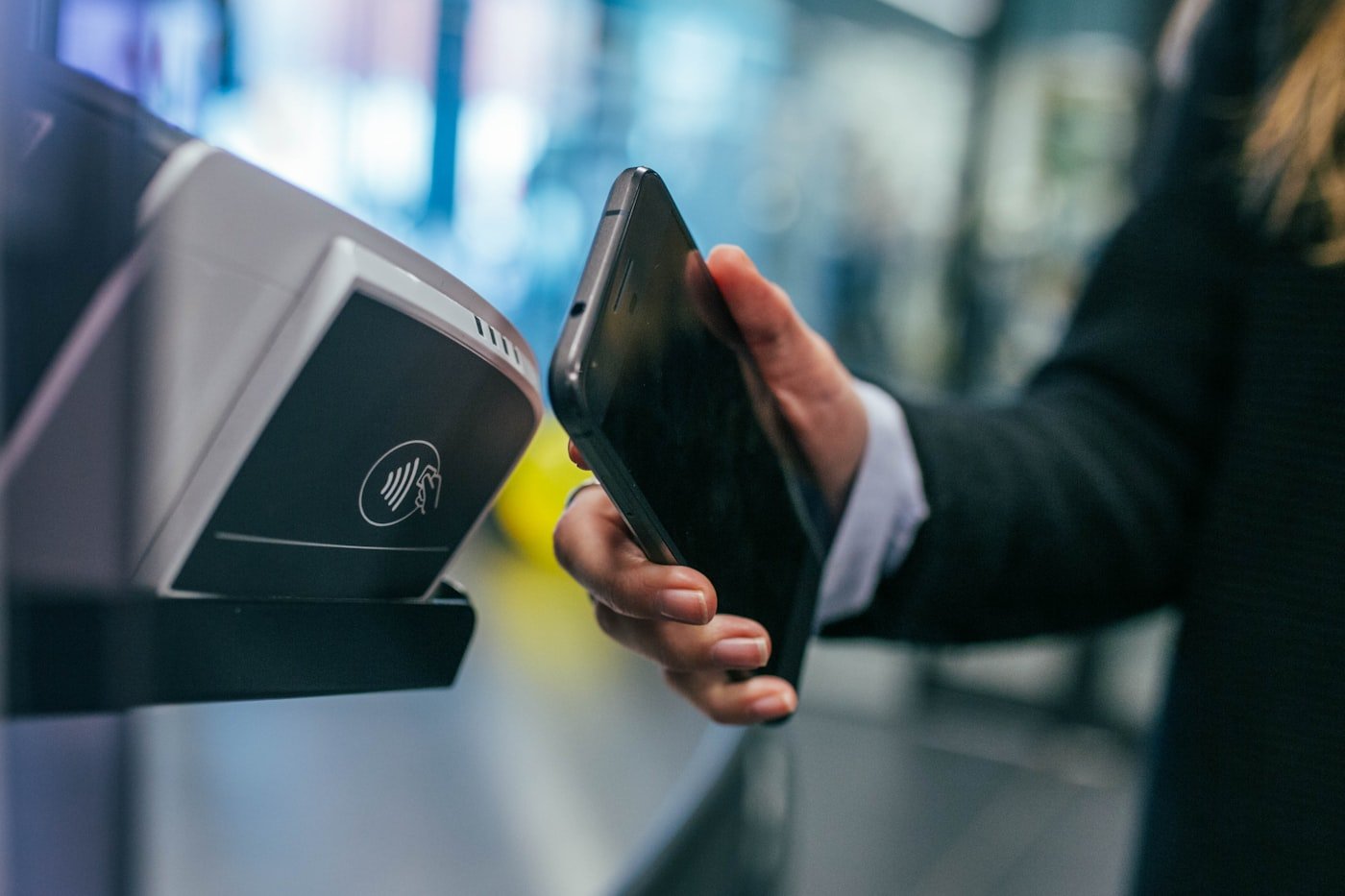
5.2 The 125 kHz LF Subsystem
5.2.1 What it is
A 125 kHz (carrier) reader/writer/emulator with its own dedicated antenna and a discrete carrier-generation + envelope-detection front end (not the ST25R3916 — different chip, different antenna). LF cards are older, simpler, and cheaper than HF cards: typically a few hundred bits of data, no crypto on most variants, modulated by load-modulating the reader’s field.
5.2.2 Supported card types
Table 1 — 2.2 Supported card types
| Card family | Read | Emulate | Clone to T5577 | Notes |
|---|---|---|---|---|
| EM4100 (EM-Marine) | ✓ | ✓ | ✓ | The most common access-control card |
| HID Prox (ProxCard II, ProxKey, ISOProx) | ✓ | ✓ | ✓ | Full FC+CC decode |
| Indala (26-bit, 27-bit, 224-bit) | ✓ | ✓ | ✓ | |
| AWID | ✓ | ✓ | ✓ | |
| FDX-A / FDX-B | ✓ | ✓ | ✓ | Animal microchips, Halo-Touch dog tags |
| PAC/Stanley | ✓ | ✓ | ✓ | UK access control |
| Paradox | ✓ | ✓ | ✓ | |
| Viking | ✓ | ✓ | ✓ | |
| ioProx | ✓ | ✓ | ✓ | |
| Jablotron | ✓ | ✓ | ✓ | |
| Nexwatch (Quadrakey) | ✓ | ✓ | ✓ | |
| Securakey | ✓ | ✓ | ✓ | |
| HiTag2 | partial | partial | varies | Crypto challenge — Flipper handles read+sniff but not the full attack; Proxmark3 wins here |
| EM4x70 (Megamos crypto) | — | — | — | Car immobilizer chips — Proxmark3 only |
| LegIC | — | — | — | Proprietary; Proxmark3 only with paid plugin |
5.2.3 The T5577 clone story
T5577 is a “blank” 125 kHz card that can be programmed to mimic any of the supported types above. Workflow on Flipper:
RFID → Read → (place reader against a card) → wait for parse →
RFID → save the parsed result →
RFID → Saved → pick the saved card → "Write" → place T5577 card →
   the Flipper writes the cloned data
The whole thing is one keypress per step. It’s fast and reliable; this single workflow is the headline feature for everyday RFID-cloning use.
5.2.4 Range and antenna realities
LF range is short — 2–6 cm, with the Flipper’s onboard LF antenna. For deep reads (cards at the bottom of a wallet, badges in a thick lanyard), you’re often margin-constrained. Proxmark3 with its larger antenna is significantly better here; there’s no easy LF range upgrade for the Flipper.
5.3 The 13.56 MHz HF Subsystem (ST25R3916)
5.3.1 The chip and the standards
ST25R3916 is the EMVCo 3.0–certified NFC analog front end. Vol 2 covered its specs; here’s the supported-cards table from the user’s perspective:
Table 2 — its specs; here's the supported-cards table from the user's perspective
| Standard | Cards | Read | Emulate | Crack |
|---|---|---|---|---|
| ISO 14443-3A | UID-only | ✓ | ✓ (magic card) | n/a |
| ISO 14443-4A | MIFARE Classic 1k/4k | ✓ | ✓ (with keys) | mfkey32, nested |
| ISO 14443-4A | NTAG 213/215/216 | ✓ | ✓ | (no crypto) |
| ISO 14443-4A | DESFire (EV1/EV2/EV3) | ✓ | partial | crypto-based, no public attacks |
| ISO 14443-3B | Calypso | ✓ | partial | n/a |
| FeliCa | Suica, PASMO, Octopus | ✓ | partial | n/a |
| ISO 15693 | ICODE SLIX, animal LF tags | ✓ | partial | partial |
| Mifare Plus | SL3 mode | partial | — | (modern crypto) |
Read range is 1–4 cm typical. The HF antenna is a printed loop on the back of the PCB.
5.3.2 The plugin parser system (firmware 1.0 reorg)
After firmware 1.0 (Sep 2024), the NFC app got a plugin parser architecture — community plugins parse application data on top of the underlying NFC framing. So a transit-card can be read by ST25R3916, and then a parser plugin decodes:
- Stored balance + last-trip records
- Card type + issuer
- Travel history (where the system stores it on-card)
Community plugins exist for NYC OMNY, BART Clipper, Boston CharlieCard,
Chicago Ventra, Tokyo Suica, London Oyster (limited), various ski
passes, hotel keys (Saflok, MIWA, Salto), amusement park bands.
List grows; check awesome-flipperzero plugins.
5.4 MIFARE Classic — The Attack Bench
The headline target. The Crypto-1 cipher is famously broken — multiple academic groups demonstrated practical attacks 2008–2015 (Garcia, Verdult, Oswald, the Hardnested paper).1 Two attacks ship on Flipper:
5.4.1 Mfkey32 (recovery from authentication exchange)
Workflow:
1. Set the Flipper into MIFARE Classic emulation with the UID of a card
   you don't yet have all keys to (clone the UID via Read first).
2. Wave the Flipper at a real reader that expects that card. The reader
   sends the auth challenge; the Flipper records the (challenge, reply,
   nonce) tuple — even though it doesn't know the key, it captures the
   exchange.
3. Run "Detect Reader" or pull the .nfc to PC; mfkey32 algorithm recovers
   keys from the captured nonce pairs.
4. Paste the recovered keys back into the .nfc dictionary; the Flipper
   can now fully read/emulate the card.
Time to recover depends on how many auth exchanges you can capture. ~5–60 minutes of waving at a reader is typical for a few keys; full 16-sector recovery on a 1k card might take many sessions if reader-side randomness is high.
5.4.2 Nested attack (recovery via known partial keys)
Once you have one known key for any sector, the nested attack extracts the other keys without needing reader interaction. Time to recover a full 16-key dictionary on a card with one known key: a few seconds to minutes on a Flipper, faster on a Proxmark3.
The standard “default keys” dictionary (mf_classic_dict.nfc) ships with
many vendor-provided defaults — start with this; if any sector authenticates
with a default key, nested can take it from there.
5.4.3 Hardnested
The “harder” variant of nested for cards that resist standard nested (post-2014 silicon revisions). Implemented on Proxmark3 mainline; the Flipper firmware ships a partial implementation that works on most cards but may need to fall back to PM3 for the toughest ones.
5.5 NTAG and DESFire
5.5.1 NTAG family
NTAG 213/215/216 are simple memory tags with no crypto on the data side (they have NDEF for URLs, password protection on later variants). Flipper:
- Reads them fully, decodes NDEF.
- Emulates them — useful for “fake an Amiibo” workflows (every Amiibo is an NTAG 215 with specific data).
- Writes to T55x7 isn’t applicable — NTAG is HF, not LF. To clone an NTAG, you need an HF “magic” tag (see §6).
5.5.2 DESFire (EV1, EV2, EV3)
Modern, cryptographic. AES-128 mutual auth, application-keyed file access. Flipper can:
- Identify the card and read public application IDs
- Read files where the application key is
00000000…0(factory default) or otherwise known - Cannot brute-force AES. No public attack works against EV2/EV3 with reasonable effort.
Real DESFire deployments (e.g. modern transit, modern access control) are out of reach with the Flipper alone.
5.6 Magic Cards (HF clone targets)
“Magic” cards are special MIFARE Classic-shaped cards where sector 0 block 0 (the UID and manufacturer block) is writable. Real cards have this block read-only at the silicon level; magic cards bypass that.
Why they matter: to fully clone a MIFARE Classic, you need to be able to write the UID. Real cards will let you write all sectors except sector 0 block 0. Magic cards let you write everything, and the cloned card behaves identically to the original to most readers.
Table 3 — 6. Magic Cards (HF clone targets)
| Type | UID writable | Sector 0 changeable | Notes |
|---|---|---|---|
| Gen 1A “Chinese magic” | ✓ | ✓ | Backdoor command sequence |
| Gen 1B | ✓ | ✓ | Different backdoor sequence |
| Gen 2 “CUID” | ✓ | partial | Only on direct write, not via auth |
| Gen 3 | ✓ | ✓ | Multiple “personality slots” |
| Gen 4 (UMC) | ✓ | ✓ | All-singing-all-dancing — emulates anything |
| Magic Ultralight | ✓ | ✓ | NTAG-compatible |
Flipper supports detect + write for Gen 1A/1B, partial for Gen 2/Gen 3, limited for Gen 4. On Proxmark3 the Gen 4 support is more complete.
5.7 NFC Read → Save → Emulate → Clone Workflow
Read:
  NFC → Read → place card → wait for full read (typically 5-30 sec for a
                            16-sector MFC; ~2 sec for NTAG)
  → if any sector auth fails, the reader will fall through to mfkey32
    or just save what it got.

Save:
  → Save → name → stored as /ext/nfc/<name>.nfc

Emulate:
  → NFC → Saved → pick → Emulate → Flipper looks like the card

Clone (to magic card):
  → NFC → Saved → pick → Write → present a magic card → done
For the emulation-vs-clone distinction: emulate keeps the data on the Flipper and presents it to readers when you wave the device; clone writes the data permanently to a physical card. Emulate is faster / non-destructive; clone gives you a thing you can put in a wallet.
5.8 The Mobile App and NFC
The Flipper Mobile App can:
- Browse
/ext/nfc/files on the device. - Push captured
.nfcfiles between phone and Flipper over BLE. - Trigger Read / Emulate from the phone (slow — the BLE link is the bottleneck).
- Display NDEF content for NTAGs.
It cannot crack keys on its own; that’s all on the Flipper. The phone is mostly a remote-control + file-transfer surface for NFC work.
5.9 ISO 15693 (Vicinity Cards)
The other ISO standard supported by the ST25R3916. Lower data rate than 14443 but longer range (up to ~1 m with a big reader; on Flipper, ~5 cm). Use cases: animal microchips, library books, ski-pass cards, some warehouse tags.
Table 4 — 9. ISO 15693 (Vicinity Cards)
| Card | Read | Emulate |
|---|---|---|
| ICODE SLIX (NXP) | ✓ | partial |
| Tag-it HF-I (TI) | ✓ | partial |
| EM4233 / EM4234 | ✓ | partial |
| Animal LF microchips (ISO 11784/11785, FDX-B) | ✓ | ✓ |
5.10 Where Proxmark3 Wins
The “buy a Proxmark when…” decision tree:
Table 5 — The "buy a Proxmark when…" decision tree
| Job | Why Proxmark3 | When Flipper still works |
|---|---|---|
| HiTag2 / EM4x70 / LegIC | Flipper firmware lacks the full crypto attack | If the card is a non-crypto LF type, Flipper |
| Mifare Classic Hardnested edge cases | PM3 mainline more complete | Most cards — Flipper handles them |
| Long-range deep-read of obscured cards | Bigger antenna, finer power control | Anything in 1–6 cm range |
| EMV card analysis (real credit cards) | More tooling | Read public NTAG portion only |
| Research-grade timing control | Real TI1 / FPGA-level access | Not Flipper territory |
| Sniffing reader↔card live transactions | PM3 sniff mode — Flipper has nothing equivalent | n/a |
The pattern: PM3 is the lab tool, Flipper is the field tool. Both are
useful; they’re complementary. See _shared/comparison.md.
5.11 Common Gotchas
Table 6 — 11. Common Gotchas
| Symptom | Cause | Fix |
|---|---|---|
| LF Read fails with the card right on the antenna | LF antenna is on the side (where the iButton pad is) | Slide the card onto the side, not the back |
| HF Read repeatedly times out | Card too far / lanyard too thick | 1–4 cm clear-air; remove from holder |
| Clone to T5577 succeeds but reader rejects it | Card type detected wrong | Re-read original; check format; some readers are picky on bit length |
| Mfkey32 captures nothing despite waving | Real reader uses random nonce + already-fetched key | Try a different reader if you have access; mfkey32 is reader-dependent |
| Magic card clone “looks right” but reader rejects | Reader checks anti-collision UID type; Gen 1A/1B may not match | Try a Gen 2/3/4 magic; or sniff the original to match more carefully |
| Mobile App reads card while in Flipper hands | App is talking to the Flipper, not directly to the card | Expected — phone NFC is just for file transfer |
5.12 What’s next
Vol 6 — Infrared, iButton/1-Wire, BadUSB, U2F. The remaining “protocol-terminal” subsystems on the Flipper, before we move to GPIO and FAP development in Vol 7.
Footnotes
-
Garcia et al., “Dismantling MIFARE Classic” (ESORICS 2008); Garcia et al., “Wirelessly Pickpocketing a MIFARE Classic Card” (IEEE S&P 2009); Verdult et al., “Dismantling iClass and iClass Elite” (ESORICS 2012); Carlo Meijer & Roel Verdult, “Hardnested” attack (Radboud University, 2015). The implementations on Flipper come from the Proxmark3 codebase (the algorithms are shared). ↩
Comments (0)