SquachWatch · Volume 3
SquachWatch Volume 3 — Parts and Where to Get Them
Bills of materials for every way to build one, from a bare $15 board to a GPS wrist unit, with sellers, price ranges and the buying traps
3.1 How to use this volume
Prices for hobby ESP32 boards move weekly, listings appear and vanish, and Amazon in particular “sells out often” of the CYD, according to the author. This volume therefore gives price ranges with the date checked (2026-10-13) rather than exact prices, and names the source of each figure. Where a price could not be confirmed, it says so.
Note — Amazon’s own pages could not be fetched for this volume (the request was refused), so Amazon figures come from third-party snapshots that say when they were taken. Before ordering, check the live listing’s title for the part number ESP32-2432S028R and the display driver.
3.2 Build options at a glance
  Seven ways to end up with a SquachWatch (prices: ranges, checked 2026-10-13)
  ═══════════════════════════════════════════════════════════════════════════
   A  Bare 2.8" CYD on USB ............................ ~$8–20      §4.1
   B  CYD + printed case + LiPo/charger/boost ......... ~$25–45     §4.2
   C  Two-board SquachMesh pair (2-pack) .............. ~$20–40     §4.3
   D  RL Phantom pre-built (battery, case) ............ $45.99–55.99 §4.4
   E  T-Watch S3 Plus wrist build (LoRa + GPS) ........ ~$59–75     §4.5
   F  CYD + ATGM336H GPS (cyd-gps, build from source) . +~$10–14    §4.6
   G  microSD for the CSV log (any of the above) ...... +a few $    §4.7
  ═══════════════════════════════════════════════════════════════════════════
Table 1 — 2. Build options at a glance
| Option | Soldering? | 3D printer? | Flasher-ready? | Battery? | Best for |
|---|---|---|---|---|---|
| A bare CYD | No | No | Yes | No (USB / power bank) | Trying it, desk use |
| B CYD + case + battery | Light (or none with a JST lead) | Yes, or buy a case | Yes | Yes, DIY | A pocket unit on a budget |
| C mesh pair | No | Optional | Yes | Optional | SquachMesh, squads, fox hunt |
| D RL Phantom | No | No | Ships flashed (choice of firmware) | Yes | No-fuss pocket unit |
| E T-Watch S3 Plus | No | No | Yes (BETA) | Yes | Wrist carry, LoRa, wardriving |
| F CYD + GPS | 3 wires | Optional | No, source build | Optional | GPS-tagged CSV on a CYD |
3.3 The core board
3.3.1 What to search for
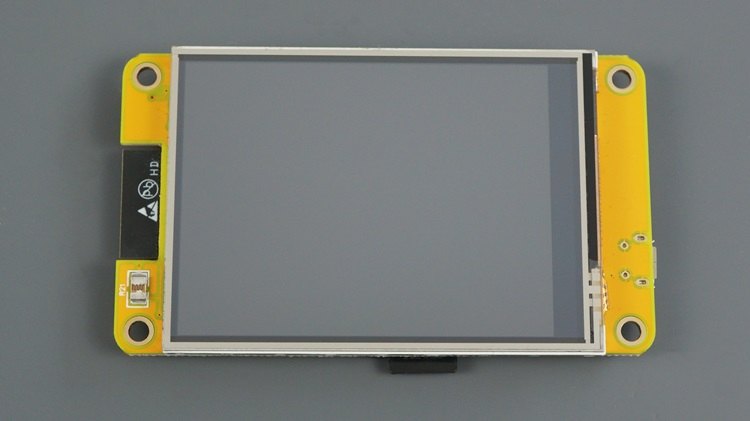
The default board is the ESP32-2432S028R, a 2.8” 240×320 resistive-touch “Cheap Yellow Display.” The author’s advice is to buy the ST7789 version in a 2-pack and, when Amazon is out, to “search for 2.8” Cheap Yellow Display.” The firmware runs on both display controllers, so a listing that says ILI9341 is still usable: the web flasher offers both builds (Vol 2 §3, Vol 5).
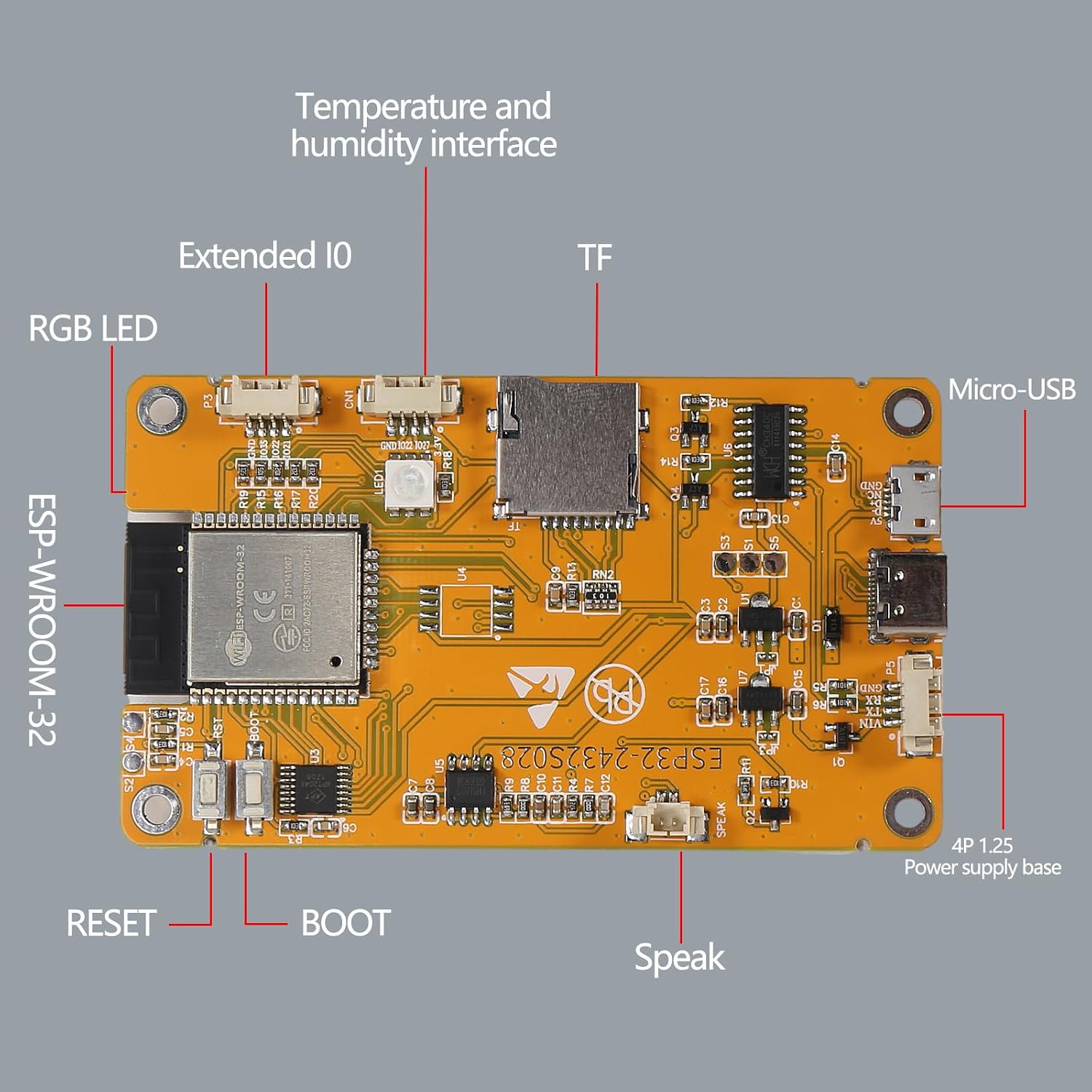
The same part number covers three connector layouts: the original micro-USB board (Vol 2 Figure 2.2), a USB-C-only board, and the two-port CYD2USB (Figure 3.3). SquachWatch runs on all three; the build is chosen by the display controller, not the connector. A USB-C board is the better buy: the project’s pin map was checked against the “USB-C” revision (docs/PINOUT.md), its build guide assumes a USB-C data cable, and USB-C listings more often carry the ST7789 panel the author recommends. Power the two-port board from a USB-A to USB-C cable (§7).
3.3.2 Price ranges for the 2.8” CYD
Table 2 — 3.2 Price ranges for the 2.8" CYD
| Source | Pack | Price seen | When / note |
|---|---|---|---|
| Street price estimate (atomic14) | 1 | $8–15 | ”typical … street price, which varies” |
| Amazon.com single (Maker Advisor snapshot) | 1 | $17.98 | Snapshot dated 2026-07-19 |
| eBay, China-based seller | 1 | $6.99 + $13.99 shipping | Listing snapshot; case-only / display-only / display+case options |
| eBay, US-based seller | 1 | $19.99 + $5.02 shipping | Listing snapshot |
| Amazon.com 2-packs | 2 | Not retrievable | Listings exist from Aurevita (B0GX5X7BH6), ELEGOO, MELIFE (B0DDPY97JC, “Type-C … ILI9341”), DIYmalls (B0DNM4SKSJ), Stemedu and others; prices not captured |
| HaleHound “2.8” CYD E32R28T Exposed SPI” | 1 | $15.85 | Different board family (ESP32-32E), runs the cyd-ili9341 build |
Working range: about $8 to $20 per board delivered, depending on seller, shipping speed and whether it comes from a domestic warehouse. That matches the README’s “about $15” and the launch video’s “$13” headline.
3.3.3 The HaleHound E32R28T alternative
HaleHound, named in the launch video description, sells the LCDwiki-documented E32R28T rather than a Sunton CYD. It is a reasonable buy for SquachWatch because the flasher’s board finder recognises the code and selects the 2.8” ILI9341 build. Per LCDwiki it adds things the classic CYD lacks: a 2-pin 1.25 mm LiPo connector with an on-board TP4054 charger (about 290 mA as shipped, 500 mA maximum), a CH340C on USB-C, and a speaker amplifier. That removes the external charger and boost converter from Option B, but SquachWatch shows no battery level on it, and its RGB LED wiring differs from the classic board (Vol 2 §5).
3.4 Bills of materials
3.4.1 Option A: bare 2.8” CYD
Table 3 — 4.1 Option A: bare 2.8" CYD
| # | Part | Qty | Spec / note | Range (2026-10-13) |
|---|---|---|---|---|
| 1 | ESP32-2432S028R | 1 | ST7789 or ILI9341, either works | $8–20 |
| 2 | USB cable | 1 | Data-capable; A-to-C safest (§7) | usually included |
| 3 | Stylus | 1 | Resistive touch works far better with one | usually included |
| 4 | USB power bank (optional) | 1 | Any 5 V bank that does not auto-shut-off at low current | already owned |
| Total | ~$8–20 |
The README’s minimum is exactly this: “No GPS, no extra modules; the board is the whole device,” and BUILD.md’s list adds only a data cable and a computer: “No soldering, no extra components.”
3.4.2 Option B: CYD + case + battery
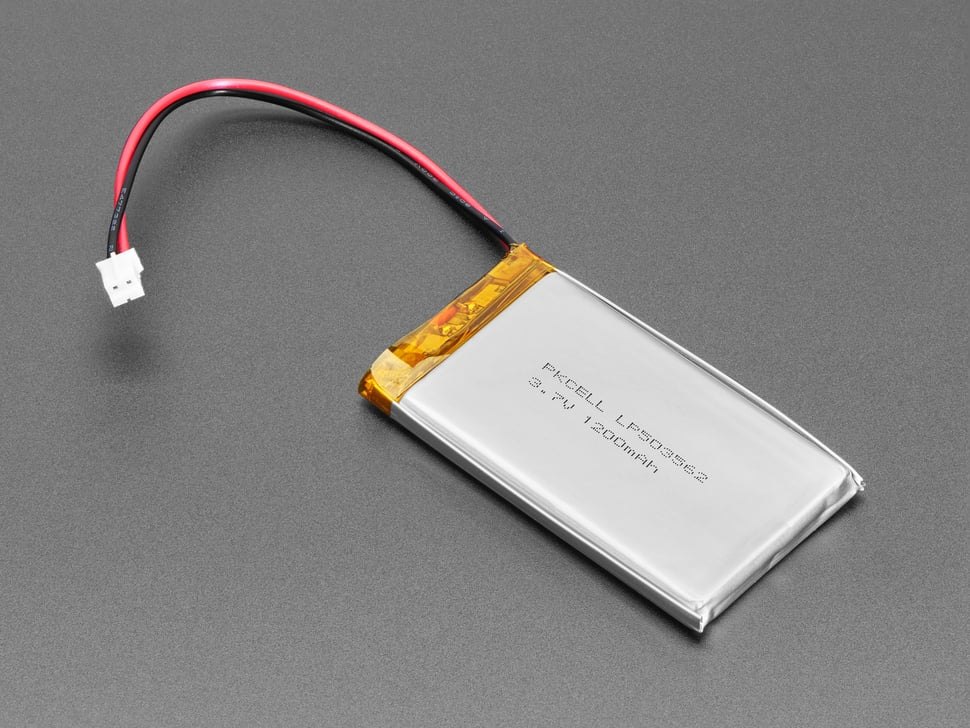
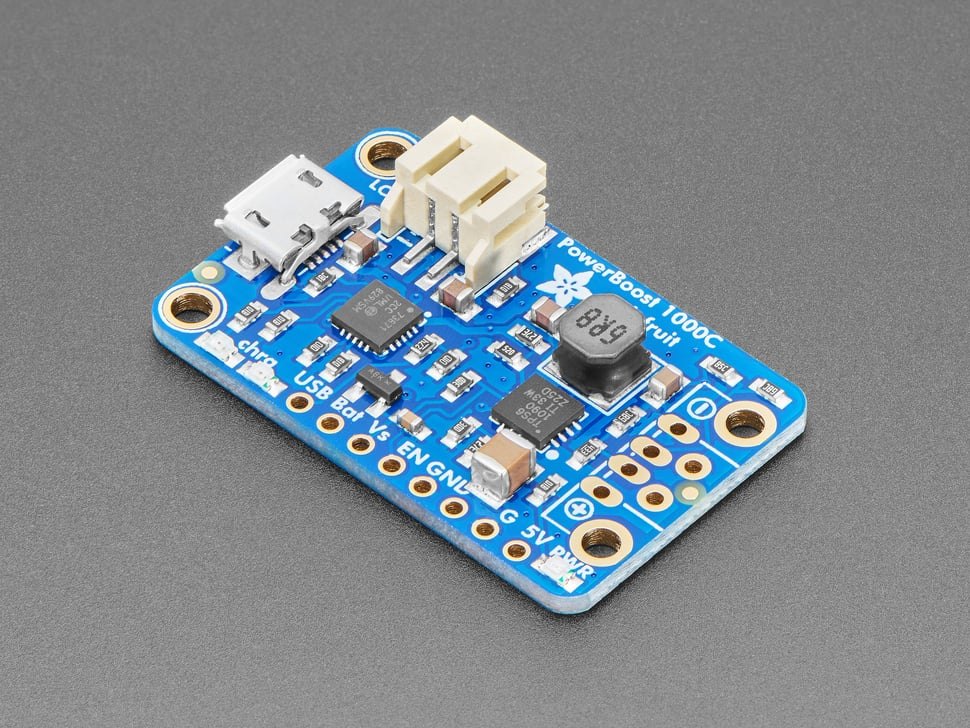
The classic CYD has no battery connector or charger (Vol 2 §6.2), so a portable build either uses a power bank or adds three parts: a single-cell LiPo, a charger module and a 5 V boost feeding the board. A common maker pattern is a TP4056 charger with a boost stage feeding the CYD’s 5 V input. Vol 4 covers the wiring and the firmware’s CHARGE MODE.
Table 4 — 4.2 Option B: CYD + case + battery
| # | Part | Qty | Spec / note | Range (2026-10-13) |
|---|---|---|---|---|
| 1 | ESP32-2432S028R | 1 | as §4.1 | $8–20 |
| 2 | Case | 1 | Print MakerWorld 3383046, “The Best 2.8” CYD Case — no extra hardware” (author’s pick), or a snap-fit alternative (§6.1) | filament, or $5–15 bought printed |
| 3 | 1S LiPo, 3.7 V | 1 | ~1000 mAh pouch (e.g. 102535 or 523450), JST lead; size it to the case | ~$6–8 each |
| 4 | Charger + 5 V boost | 1 | TP4056-class USB-C charger with boost output, or TP4056 + separate MT3608-class boost set to 5.0 V | ~$2–11 per module or pack |
| 5 | Power lead to CYD | 1 | 4-pin 1.25 mm (MX1.25/PicoBlade-style) lead into P1 VIN/GND, or USB | ~$1–5 for an assortment |
| 6 | Slide switch (optional) | 1 | Between boost output and VIN | <$1 |
| Total | ~$25–45 |
Warning — A bare LiPo cell connected straight to an ESP32 board’s 5 V input, or a cheap module set wrongly, can damage the board or the cell. Buy cells with a protection circuit, check the boost output with a meter before connecting the CYD, and never leave an unprotected pouch cell charging unattended. Vol 4 gives the wiring.
3.4.3 Option C: a two-board SquachMesh pair
SquachMesh needs a second SquachWatch, which is why the author recommends a 2-pack (“you’ll want two for SquachMesh”). The two boards do not have to match: any two boards running a mesh-enabled build will see each other, since every CYD-family environment in platformio.ini sets -DSQUACH_MESH=1.
Table 5 — 4.3 Option C: a two-board SquachMesh pair
| # | Part | Qty | Note | Range (2026-10-13) |
|---|---|---|---|---|
| 1 | ESP32-2432S028R 2-pack | 1 | Amazon 2-packs listed by several brands (§3.2) | ~$16–40 for the pair |
| 2 | Cases | 2 | as §4.2 | filament |
| 3 | Power | 2 | USB power banks or Option B kits | — |
| Total (bare pair) | ~$20–40 |
Read Vol 9 before buying for this purpose: TRANSMIT is off by default and turning it on makes a board trackable by a fixed Bluetooth address.
3.4.4 Option D: the RL Phantom pre-built
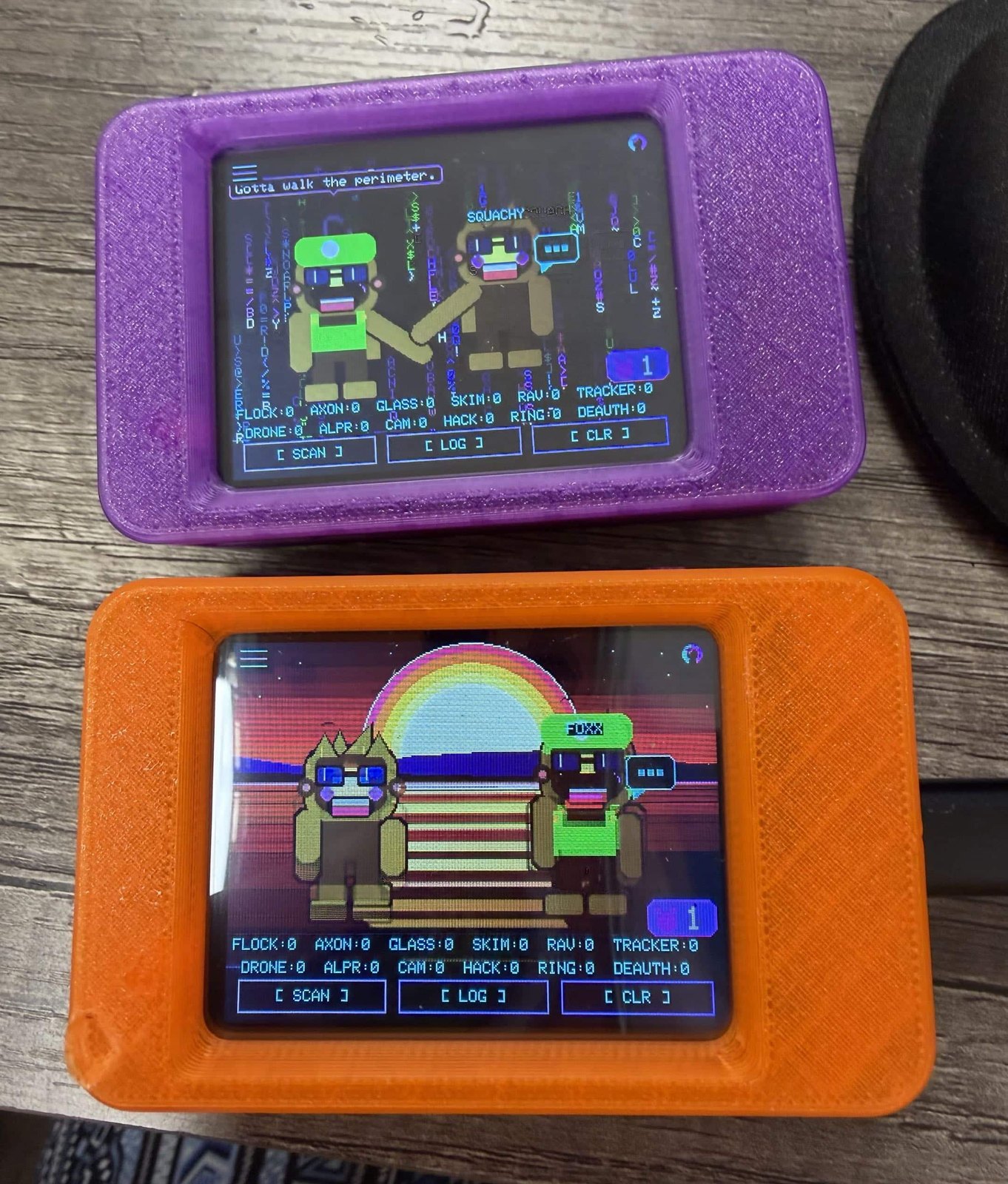
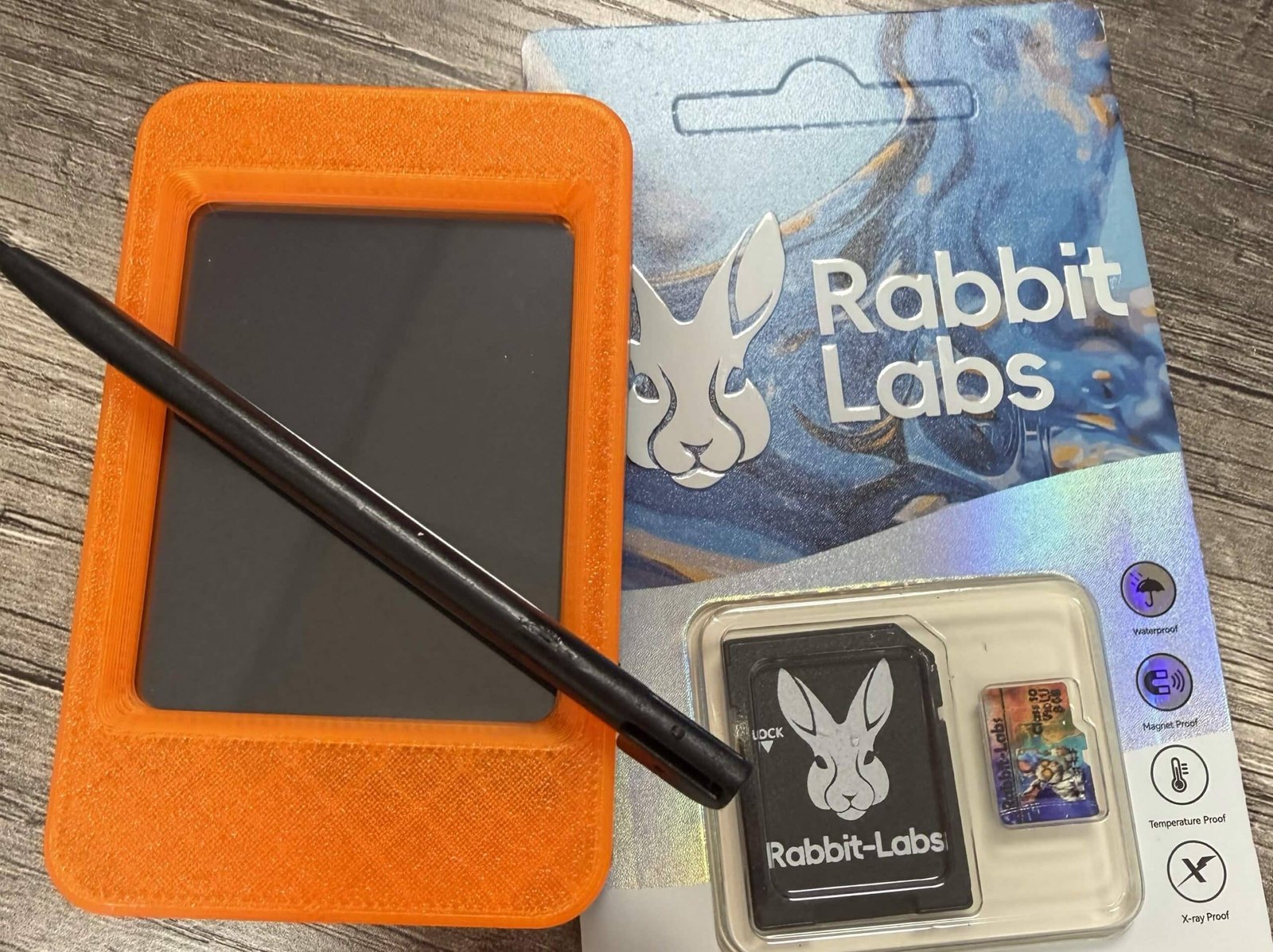
The Phantom by Rabbit Labs is the only commercial pre-built named by the author. It is the ESP32-2432S024R board that SquachWatch supports as “RL Phantom 2.4"" (rlphantom-r), with the status light on the front (Vol 2 §7.3).
Table 6 — 4.4 Option D: the RL Phantom pre-built
| Item | Detail (Rabbit Labs product page, checked 2026-10-13) |
|---|---|
| Price | $45.99–55.99 depending on bundle |
| Firmware | Pre-flashed with a choice of GhostESP Revival or SquachWatch |
| Battery | Rabbit Labs UN38.3 safety-tested cell, preinstalled; capacity not listed; ships at ~20 %, ~2 h to charge from a USB port |
| Case | Included; colour assigned at random from several options |
| In the box | The Phantom, battery, stylus; bundles add a Rabbit Labs 8 GB or 16 GB SD card |
| Reviews | 4.82/5 from 22 reviews at the time checked |
| Charging note | The page advises against “cell chargers” because they “don’t support PD” |
Source: https://rabbit-labs.com/product/the-phantom-by-rabbit-labs/, checked 2026-10-13. Display size is not stated on the page; the SquachWatch build identifies it as 2.4”.
Tip — The Phantom has a capacitive sibling (ESP32-2432S024C). SquachWatch’s capacitive Phantom build “has never run on a real board” and is not on the flasher. Rabbit Labs’ product is the resistive unit the flasher supports, but anyone buying a bare ESP32-2432S024 board should check for the R suffix.
3.4.5 Option E: the T-Watch S3 Plus wrist build
The LilyGo T-Watch S3 Plus is the most capable SquachWatch: LoRa receive (Meshtastic and MeshCore) plus GPS wardriving with a WiGLE export, on the wrist with haptic alerts (Vol 2 §7.4, Vol 9). The plain T-Watch S3 has LoRa but no GPS. Both are BETA.
Table 7 — 4.5 Option E: the T-Watch S3 Plus wrist build
| # | Part | Qty | Note | Range (2026-10-13) |
|---|---|---|---|---|
| 1 | LilyGo T-Watch S3 Plus | 1 | Choose the LoRa band for the region: 915 MHz (Americas) or 868 MHz (Europe). The firmware listens on 906.875/910.525 MHz (US) or 869.525/869.618 MHz (EU) | $58.74 LilyGo (sold out when checked); $63.85 Meshtastic edition (sold out); $72.97 Rokland US915; ~$75 AliExpress |
| 1-alt | LilyGo T-Watch S3 (no GPS) | 1 | LoRa receive only | $42.98 LilyGo (sold out); $48.49 LilyGo US warehouse |
| 2 | USB-C data cable | 1 | For the web flasher and the WiGLE download | owned |
| Total | ~$43–75 |
Sources: LilyGo product pages (lilygo.cc/products/t-watch-s3-plus, t-watch-s3, t-watch-s3-us); Rokland K254-02 listing; CNX Software 2025-04-04 (S3 Plus: u-blox MIA-M10Q GPS, 940 mAh battery, ~$75 AliExpress); all checked 2026-10-13. LoRa frequencies from docs/LORA.md.
The watch has no SD slot. Wardrive data stays in the watch’s flash (up to 125,000 sightings) and is downloaded through the web flasher’s DOWNLOAD WIGLE FILE button in desktop Chrome or Edge.
[FIGURE SLOT — Vol 3 §4.5] LilyGo T-Watch S3 Plus retail box and contents (watch, strap, USB-C cable), with the band label (868/915 MHz) visible on the box.
3.4.6 Option F: GPS on a CYD (cyd-gps)
The cyd-gps and cyd-ili9341-gps builds add a GPS position to each SD row, set the clock without Wi-Fi, and enable wardriving to a WiGLE CSV on the SD card. They are “not in the flasher, CI or releases” and wait “for a test on hardware before it ships,” so this option means building from source (Vol 6).
Table 8 — 4.6 Option F: GPS on a CYD (cyd-gps)
| # | Part | Qty | Spec | Range (2026-10-13) |
|---|---|---|---|---|
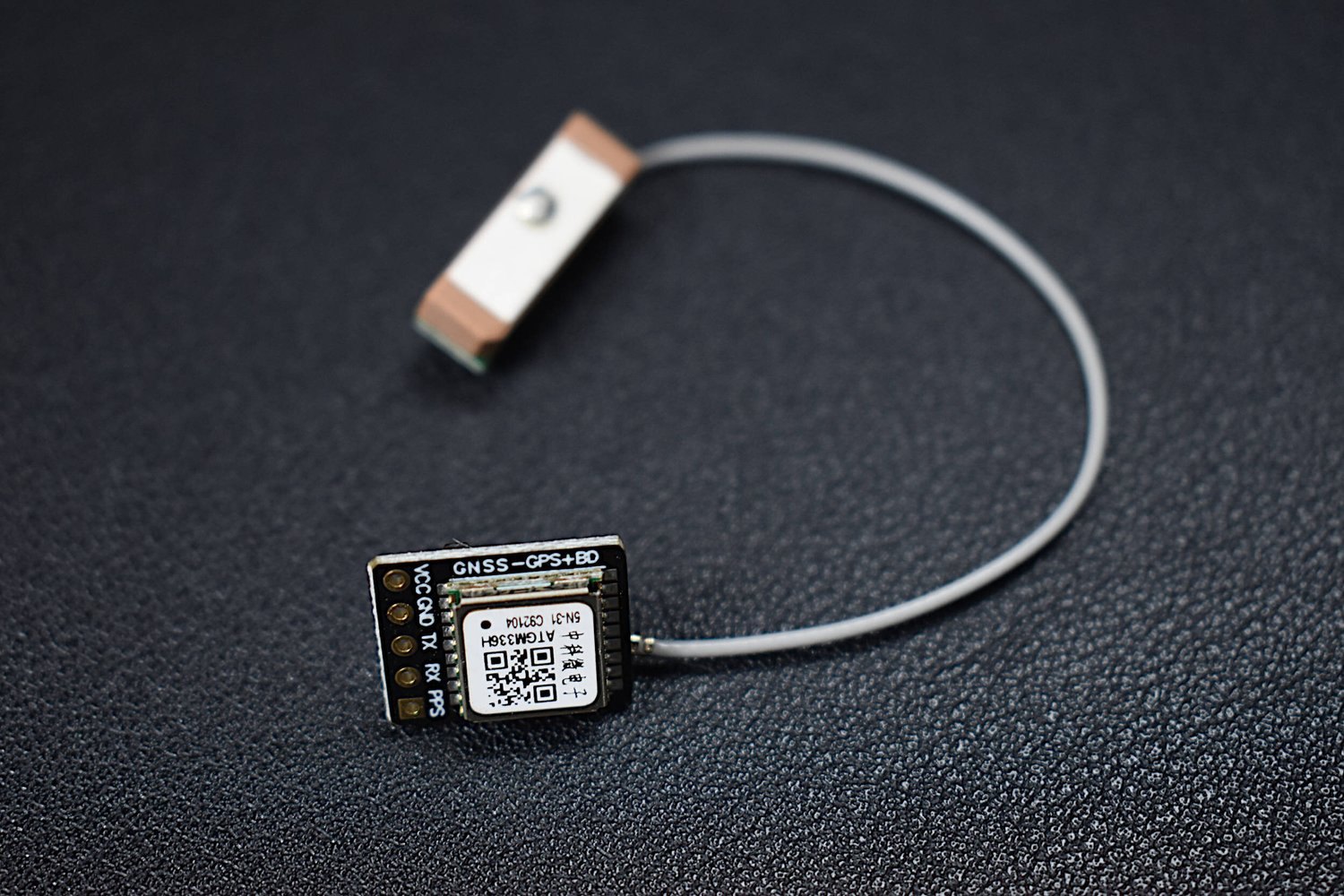
| 1 | ATGM336H GPS module | 1 | The module the repo names; 9600 baud default NMEA; ceramic or external active antenna | ~$10–14 |
| 2 | 4-pin 1.25 mm lead(s) | 1–2 | Module TX → P3 GPIO 35; VCC → CN1 3.3 V; GND → CN1 GND; module RX unconnected | ~$1–5 |
| 3 | microSD | 1 | Required for the wardrive CSV (/wigle-YYYYMMDD-HHMM.csv) | §4.7 |
Wiring per docs/PINOUT.md. Because the module’s RX is not connected, “the firmware cannot configure the module. It runs on the module’s defaults,” so buy a module that defaults to 9600 baud NMEA. Most ATGM336H boards do, but check the listing. Vol 4 has the wiring diagram.
Boards with GPS already on them (T-Watch S3 Plus, Marauder V8, T-Deck Plus) need none of this.
3.4.7 Option G: the microSD card
Table 9 — 4.7 Option G: the microSD card
| Spec | Recommendation | Source |
|---|---|---|
| Format | FAT32 | docs/BUILD.md (“FAT32-formatted”) |
| Capacity | A small SDHC card is plenty; the logs are CSV text | Rabbit Labs bundles 8 GB/16 GB cards |
| What is written | squachwatch-<day>.log (ts,type,rssi,mac,channel,vendor,ssid); wardrive CSV on GPS builds | README.md “Usage”; docs/PINOUT.md |
| Required? | No. Without a card the ~1,800-sighting flash “black box” still works | docs/FAQ.md |
Cards larger than 32 GB usually arrive formatted exFAT and would need reformatting to FAT32. The repo does not say whether exFAT works, so FAT32 is the safe choice.
3.5 Other supported boards
For buyers who want a capability the CYD lacks. Status follows the README at v1.36.0 (Vol 2 §7).
Table 10 — 5. Other supported boards
| Board | Why buy it | Status | Price seen (2026-10-13) | Source |
|---|---|---|---|---|
| ESP32-2432S032C 3.2” capacitive | Bigger IPS screen, capacitive, no BETA label | Flasher, NEW | €17.25 incl. VAT (Tinytronics, Jingcai-branded) | tinytronics.nl |
| Freenove FNK0103 3.2” resistive | IPS, resistive | Flasher | Not confirmed; a Freenove 3.2” CYD seen at ~96 AED (UAE) | pricena.com |
| RockBase NM-CYD-C5 | 5 GHz Wi-Fi, ESP32-C5, 16 MB/8 MB | BETA | ~$21.53 on AliExpress (CNX Software report) | cnx-software.com, 2026-07-07 |
| Freenove ESP32-S3 2.8” FNK0104B | Battery connector + gauge, speaker, power button | BETA | Not confirmed; Amazon listing out of stock per camelcamelcamel | camelcamelcamel.com |
| Marauder V8 (justcallmekoko) | 5 GHz + GPS + battery gauge in one | BETA | Not confirmed: no official price found; check justcallmekoko’s own store | — |
| LilyGo T-Deck Plus | Keyboard, GPS, 2000 mAh | BETA; LoRa left out of v1.36.0 | Not checked | — |
| M5Stack StickS3 / Cardputer ADV | Already covered in hub dives | BETA | See the M5Stick S3 and M5Stack Cardputer ADV deep dives | — |
| Elecrow CrowPanel Advance 7.0 | 7” desk unit | BETA; needs a 2 A supply | Not checked | — |
| ESP32-3248S035R 3.5” | Bigger screen | Boot-loops on hardware (frozen) | Not recommended | platformio.ini |
Note — A Freenove ESP32-S3 2.8” ordered as FNK0104A is the version without a touch panel. SquachWatch “should run with no touch … but has not been tried.” Order the FNK0104B.
3.6 Accessories
3.6.1 Cases
Table 11 — 6.1 Cases
| Case | Hardware needed | Note | Source |
|---|---|---|---|
| MakerWorld 3383046, “The Best 2.8” CYD Case — no extra hardware” | None (per title) | The author’s pick in the launch video description; the page itself was not reachable for this volume | Launch video description |
| MakerWorld 1517808, USB-C Snap-Fit Case with Pen and Magnetic Mount | None for assembly; three 6 mm magnets optional for the mount | Designed for the USB-C board revision | makerworld.com/models/1517808 |
| MakerWorld 2327949, CYD ESP32-2432S028R New Case | Screw-less, support-free, parametric | Holes can be toggled for different interfaces | makerworld.com/models/2327949 |
| MakerWorld 2787810, CYD Desk Buddy | M3×10 screws | Desk stand | makerworld.com/models/2787810 |
All checked 2026-10-13. Check that the case’s USB cut-out matches the board revision (micro-USB, single USB-C, or two-port) before printing.
3.6.2 Small parts worth having
Table 12 — 6.2 Small parts worth having
| Part | Why |
|---|---|
| Known-good data USB cable (A-to-C) | “charge-only cables are the number one cause of ‘it won’t connect‘“ |
| 4-pin 1.25 mm (MX1.25) pigtail assortment | Every CYD expansion connector uses it (Vol 2 §6.3) |
| Spare stylus | Resistive touch, five-target calibration |
| CH340 driver (download, not purchase) | Windows usually needs it; the flasher links it |
| Second board | SquachMesh, and a known-good unit when debugging |
3.7 Buying traps
Table 13 — 7. Buying traps
| Trap | What goes wrong | How to avoid it |
|---|---|---|
| ST7789 vs ILI9341 | Listings often say “ILI9341” whatever is fitted; the wrong build gives a solid white screen | Not a problem for SquachWatch: flash one build, then the other (Vol 5) |
| R vs C vs N suffix | …R resistive, …C capacitive, …N no touch. The 2.8” support is documented for ESP32-2432S028R; a 2.8” …C is not on the supported list | Buy the exact code ESP32-2432S028R; for capacitive, buy the 3.2” ESP32-2432S032C |
| USB revision | Micro-USB, single USB-C and two-port “CYD2USB” boards exist; the CYD2USB’s USB-C lacks CC pull-downs, so a C-to-C cable may not power it | Use an A-to-C cable; match the case’s USB cut-out |
| Charge-only cable | Board powers but never appears as a port | Use a data cable |
| Look-alikes | ESP32-32E boards (E32R28T/E32R35T) are not Sunton CYDs; different LED/battery wiring | They work via the board finder; expect the status light and battery to behave differently (Vol 2 §7.3) |
| The 3.5” board | ESP32-3248S035R boot-loops on hardware | Avoid unless prepared to debug |
| Capacitive Phantom | ESP32-2432S024C build never run on hardware | Buy the S024R or the Rabbit Labs unit |
| Wrong T-Watch | The plain S3 has no GPS; band variants (433/868/915 MHz) differ | Buy the S3 Plus for wardriving; pick the regional band |
| Original Cardputer | ”Not the original Cardputer”: only the ADV is supported | Check for “ADV” |
| Freenove FNK0104A | No touch panel | Buy FNK0104B |
| Implausible prices | A search result showed an AliExpress CYD at $0.99, likely a scraping error or bait listing | Ignore anything far below the $8–20 range |
  Pre-purchase checklist (the 2.8" CYD)
  ┌──────────────────────────────────────────────────────────────────┐
  │ [ ] Listing names ESP32-2432S028R (R = resistive)                │
  │ [ ] 2.8", 240×320 — either ST7789 or ILI9341 is fine             │
  │ [ ] USB connector noted (micro / USB-C / two-port) for the case  │
  │ [ ] Includes a cable — or a known data cable on hand             │
  │ [ ] Price in the ~$8–20 band; 2-pack if SquachMesh is planned    │
  │ [ ] Seller ships domestically if it is wanted this week          │
  └──────────────────────────────────────────────────────────────────┘
3.8 Seller directory
Table 14 — 8. Seller directory
| Seller | What | Type | URL |
|---|---|---|---|
| Amazon (various brands) | 2.8” CYD singles and 2-packs | Marketplace | amazon.com, search “2.8 Cheap Yellow Display” |
| AliExpress (various) | CYD, NM-CYD-C5, T-Watch | Marketplace, slow shipping | aliexpress.com |
| eBay (various) | CYD singles, LiPo cells, charger modules | Marketplace | ebay.com |
| HaleHound | 2.8” CYD E32R28T “Exposed SPI” | Named by the author | halehound.com/products/2-8-cyd-e32r28t-exposed-spi |
| Rabbit Labs | The Phantom pre-built | Named by the author | rabbit-labs.com/product/the-phantom-by-rabbit-labs/ |
| LilyGo | T-Watch S3, S3 Plus, T-Deck Plus | Manufacturer | lilygo.cc |
| Rokland | T-Watch S3 Plus US915 | US reseller | store.rokland.com |
| Tinytronics | ESP32-2432S032C (EU) | Reseller | tinytronics.nl |
| Universal-Solder | ATGM336H GPS (Canada) | Reseller | universal-solder.ca |
| MakerWorld | Printable cases | Model repository | makerworld.com |
3.9 Cheatsheet updates from this volume
Table 15 — 9. Cheatsheet updates from this volume
| Fact | Value (checked 2026-10-13) |
|---|---|
| 2.8” CYD price | ~$8–20 per board; search “ESP32-2432S028R” or “2.8 Cheap Yellow Display” |
| Author’s advice | ST7789 version, 2-pack for SquachMesh |
| HaleHound E32R28T | $15.85; has a LiPo connector + TP4054 charger; uses the cyd-ili9341 build |
| RL Phantom | $45.99–55.99; battery + case + stylus; SquachWatch or GhostESP Revival pre-flashed |
| T-Watch S3 Plus | ~$59–75; LoRa + GPS; pick 868 or 915 MHz |
| T-Watch S3 | ~$43–49; LoRa only |
| NM-CYD-C5 | ~$22 (AliExpress); 5 GHz |
| GPS add-on | ATGM336H ~$10–14; cyd-gps source build only |
| Battery kit | 1S ~1000 mAh LiPo ~$6–8 + TP4056/boost ~$2–11 |
| SD card | FAT32, small SDHC; optional |
| Avoid | 3.5” ESP32-3248S035R, capacitive Phantom, FNK0104A, original Cardputer |
Comments (0)