Flipper Zero · Volume 1
Flipper Zero Volume 1 — Series Overview & Decision Tree
An engineer's tour of the device, the modules, and the ecosystem — with depth indices into Volumes 2–12
Firmware ↔ Device matrix. Two firmwares in the Firmware hub run on a Flipper: ESP32 Marauder Firmware (on the official WiFi Devboard) and Ducky Script (the Flipper’s BadUSB keystroke-injection mode).
1.1 About this Series
This is a twelve-volume engineer-grade reference for the Flipper Zero. It assumes a reader who has shipped firmware before, understands embedded peripherals from the silicon up, and wants schematic-grade theory of operation rather than a tutorial. Volume 12 is the field cheatsheet — print and laminate.
The series is structured as a graph, not a book. Vol 1 (this one) gives you the spine and the decision tree; Vol 2 is the hardware foundation; Vol 3 is the firmware ecosystem; Vols 4–7 are subsystems (sub-GHz, RFID/NFC, IR/ iButton/BadUSB/U2F, GPIO/FAP/JS); Vols 8–10 are the module ecosystem (official, third-party, DIY); Vol 11 is end-to-end workflows; Vol 12 is the cheatsheet. Cross-references between volumes are dense; you don’t need to read in order after Vols 1 and 3.
1.2 What the Flipper Is — and Isn’t
1.2.1 The hardware sentence
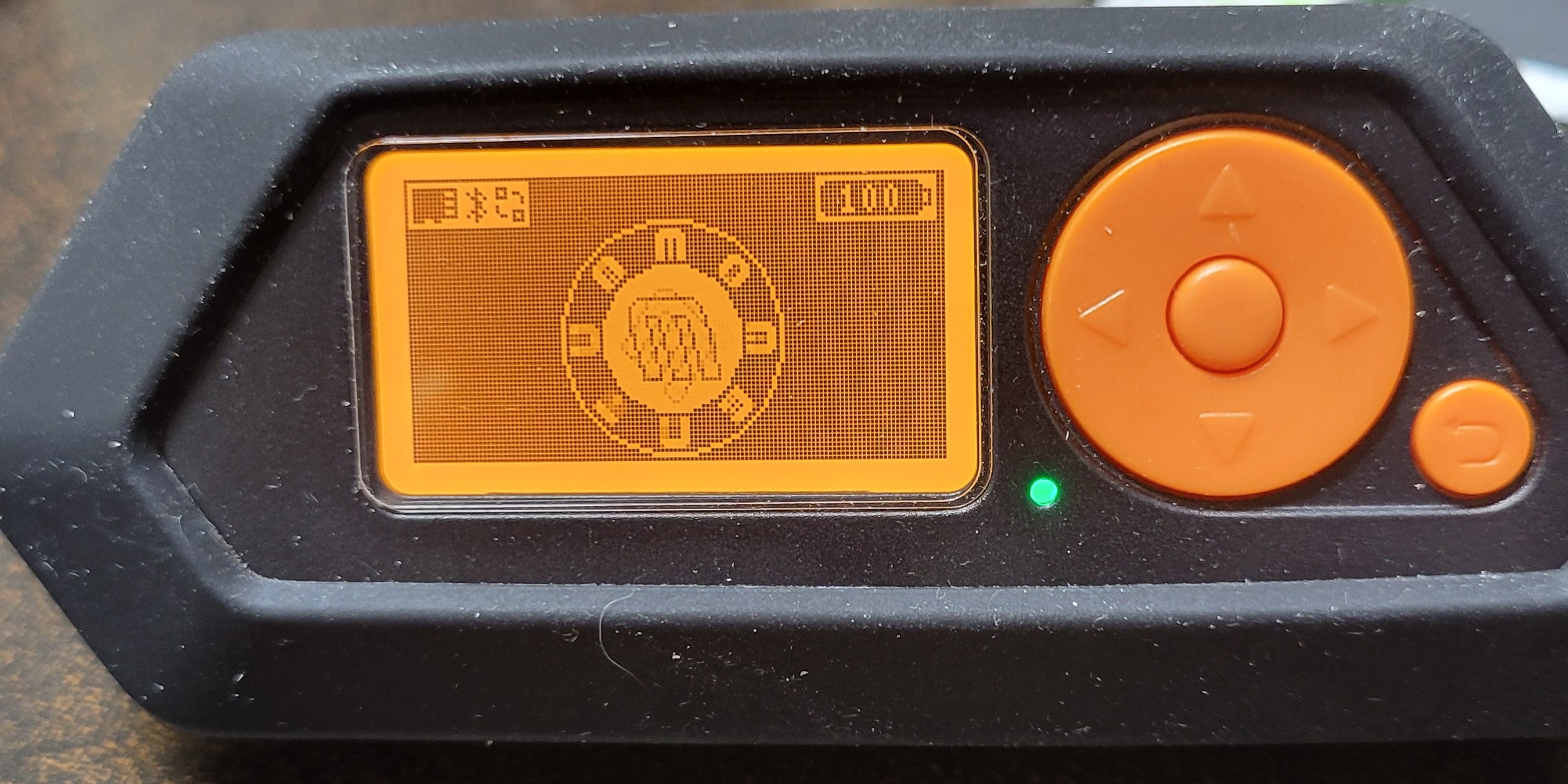
The Flipper Zero is an STM32WB55-based pocket multitool with onboard sub-1 GHz radio (TI CC1101), 13.56 MHz HF reader (ST ST25R3916), 125 kHz LF RFID, 38 kHz IR transceiver, iButton/1-Wire contact, 18-pin GPIO header, microSD slot, 128×64 monochrome LCD, 2,000 mAh LiPo, USB-C, and a BLE radio core that runs ST’s certified stack. It boots from internal STM32WB55 flash; user files live on the SD.
1.2.2 The framing
It is best understood as a controller and protocol terminal, not an SDR. It captures, decodes, replays, emulates, and bridges over a fixed catalog of protocols implemented in firmware. For wideband signal analysis or modulation R&E, pair it with a HackRF One or RTL-SDR — see Vol 11 §3 for the recipe.
1.2.3 What it isn’t
- It isn’t an SDR. The CC1101 is a packet-radio narrowband transceiver, not an IQ-streaming front end. Frequency analyzer mode shows RSSI, not spectrum.
- It isn’t a Proxmark3. The ST25R3916 is fine for everyday cards (MIFARE
Classic, NTAG, DESFire); for unusual LF protocols (HiTag2, EM4x70, LegIC)
the Proxmark wins. See
../_shared/comparison.md. - It isn’t an oscilloscope or logic analyzer. The GPIO header can be driven as a SUMP-protocol logic analyzer over USB-CDC (see Vol 9 §19) but you’ll exceed its sample rate fast. Bus Pirate 5 is the right tool for embedded protocol bring-up.
- It isn’t an unrestricted RF transmitter. Stock firmware enforces regional
TX restrictions; custom firmwares (Momentum, Unleashed, RogueMaster)
remove those locks but the legal restrictions don’t go away. See
../_shared/legal_ethics.md.
1.3 The Capability Surface
Table 1 — 3. The Capability Surface
| Domain | Stock capability | With which module |
|---|---|---|
| Sub-GHz capture/replay | 300–928 MHz, 5–10 m | External CC1101 amp → 70–150 m (Vol 8 §4) |
| Wi-Fi attacks | None onboard | Official WiFi Devboard + Marauder (Vol 8 §1); Game Over (Vol 9); AWOK V3 (Vol 9); Apex 5 (Vol 9) |
| 2.4 GHz keyboard injection | None | NRF24 module + Mousejack FAP (Vol 8 §3) |
| HDMI/DVI video out | None | Video Game Module (Vol 8 §2) — owned |
| Multi-radio wardriving | None | Game Over module (Vol 9) — owned; AWOK Dual Touch V3 (Vol 9) — owned |
| 13.56 MHz NFC | MIFARE Classic + nested, NTAG, DESFire, FeliCa | — |
| 125 kHz LF RFID | EM4100, HID Prox, Indala, AWID, T5577 clone | — |
| BadUSB | DuckyScript via USB-HID | — |
| BLE attacks | BLE Spam, beacon work | WiFi Devboard for higher-power (Vol 8 §1) |
| GPS / wardriving | None | NEO-6M / u-blox via UART (Vol 9 §15); AWOK V3 onboard |
| Embedded debug | SWD probe via two FAPs (Vol 9 §18) | Black Magic Probe via WiFi Devboard reflash (Vol 8 §1) |
| Logic analysis | 8-channel SUMP via FAP, slow | — |
This table is the framing for Vols 4–10. Each capability has a section in the volume that covers it; each module has a chapter in Vol 8 (official) or Vol 9 (third-party).
1.4 Decision Tree — When to reach for the Flipper
"I need to do RF / RFID / NFC / IR / BadUSB work, on the bench or in the
 field, and I might need to write a custom application for it."

  ├── Sub-GHz, known protocol catalog, 433/868 MHz?
  │     → Flipper. Start with Sub-GHz → Read or Read RAW.
  │       For 70–150 m range, swap the antenna/amp (Vol 8 §4).
  │       For wideband or arbitrary modulation: HackRF (Vol 4 §11).
  │
  ├── 13.56 MHz NFC card you need to read/clone/emulate?
  │     → Flipper. Mfkey32 + nested attack onboard. Magic cards (Vol 5 §6)
  │       handle UID/sector-0 emulation. For HiTag2/EM4x70/LegIC: Proxmark3.
  │
  ├── 125 kHz LF clone to T5577?
  │     → Flipper. One keypress workflow.
  │
  ├── IR remote, learn or universal?
  │     → Flipper. TSOP75338 + 3-LED bank. For 30–100 ft range,
  │       Rabbit-Labs IR Blaster (Vol 9 §14) — needs Unleashed/RogueMaster.
  │
  ├── BadUSB DuckyScript payload delivery?
  │     → Flipper, with caveat: device enumerates as Flipper unless
  │       firmware spoofs descriptor. For stealth: Hak5 Rubber Ducky.
  │
  ├── Wi-Fi attacks?
  │     → Flipper + WiFi Devboard with Marauder (entry tier);
  │       Flipper + Game Over or AWOK V3 (Vol 9) for multi-radio + standalone;
  │       Flipper + Apex 5 (Vol 9) for 5 GHz Wi-Fi 6;
  │       For sustained dual-radio engagements: WiFi Pineapple (not in lineup).
  │
  ├── 2.4 GHz wireless mouse/keyboard injection (MouseJack)?
  │     → Flipper + NRF24 module. The only MouseJack-capable tool in lineup.
  │
  ├── Wideband RF analysis, modulation reverse-engineering, IQ recording?
  │     → Not Flipper. HackRF One + GNU Radio is the right path.
  │
  ├── Deep embedded protocol bring-up (UART/SPI/I²C/JTAG/SWD/PMBus on an
  │     unknown board)?
  │     → Bus Pirate 5 wins. Flipper handles single-protocol one-offs but
  │       lacks the Bus Pirate's mode catalog and color VT100 UI.
  │
  └── On-the-floor pen-test running Kali / Metasploit / Wireshark?
        → Clockwork uConsole. Flipper rides as a peripheral via qFlipper +
          mobile / desktop UI.
1.5 Series Topology — Where each volume lives
Table 2 — 5. Series Topology — Where each volume lives
| Vol | Topic | Read for |
|---|---|---|
| 1 | Series overview, decision tree, capability matrix | First read |
| 2 | Hardware: STM32WB55, power tree, every subsystem schematic-grade | Anyone touching the device at the bench |
| 3 | Firmware ecosystem: Official, Momentum, Xtreme, Unleashed, RogueMaster — install, recovery, BLE re-pair, module-firmware pairing matrix | First-time install + every firmware swap |
| 4 | Sub-GHz CC1101: register-level, modulation modes, supported protocols, when external amp helps | Garage doors, key fobs, weather stations, IoT |
| 5 | RFID & NFC: 125 kHz LF + 13.56 MHz HF (ST25R3916), magic cards, mfkey32 + nested, where Proxmark wins | Access-card audit, NFC tag programming |
| 6 | IR, iButton/1-Wire, BadUSB, U2F | Universal remotes, DS1990A, DuckyScript |
| 7 | GPIO header, FAP development with ufbt, JS runtime on Momentum | Writing applications for the device |
| 8 | Official Modules — WiFi Devboard, Video Game Module (full chapter), NRF24, official CC1101 amp | VGM is in the lineup |
| 9 | Third-Party Modules — Ruckus Game Over (full chapter), AWOK Dual Touch V3 (full chapter), Mayhem, Apex 5, EvilCrow, GPS, sensors, ~25 others | Game Over + AWOK V3 are in the lineup |
| 10 | DIY Modules: GPIO reference, KiCad templates, mechanical envelope, sample projects, PCB-from-scratch checklist | When the right module doesn’t exist yet |
| 11 | Workflows & recipes: garage-door analysis, RFID badge audit, BLE keyboard pentest, SDR companion mode | Field work |
| 12 | Cheatsheet — print/laminate one-pagers | Always carry |
1.6 Hardware Status at the time of writing
Hardware in the lineup includes:
- Multiple Flipper Zero units (production rev F7B9C6).
- Official WiFi Devboard (ESP32-S2 WROVER) — currently running Marauder.
- Official Video Game Module (RP2040 + ICM-42688-P + DVI). Full chapter in Vol 8 §2.
- NRF24 module (community-sourced, standard 5-pin SPI pinout).
- External CC1101 sub-GHz module / amplifier (extends 433 MHz range to ~150 m).
- Ruckus // section80 “Game Over” module (third-party multi-radio with OLED). Full chapter in Vol 9 §6.
- AWOK Dynamics Dual Touch V3 (third-party Wi-Fi/GPS wardriver). Full chapter in Vol 9 §7.
The decision tree above weights “owned” answers higher than “could be acquired” answers — when a job is doable with what’s on hand, that wins.
1.7 Lab-Discipline Posture
This series catalogs what the device can do, in detail. What you may legally do with it depends on jurisdiction, the ownership of the target, and the applicable RF / computer-misuse / access-card-fraud regimes.
The standing rule for everything in Hack Tools/:
Own the hardware, or have written authorization. Sub-GHz TX power and frequency restrictions vary by region; jamming is illegal nearly everywhere. NFC/RFID cloning of access systems requires authorization. BadUSB use is computer-attack territory — only against owned hardware.
See ../_shared/legal_ethics.md.
1.8 What’s next
Vol 2 — Hardware. STM32WB55, power tree, every subsystem from
the schematic up. Read with the Main PCB schematic open in another window
(02-inputs/schematics/Flipper_MAIN_PCB_F7B9C6.pdf, mirrored to
03-outputs/schematics/).
If you’re reading this on a Flipper-already-in-hand and just want to do something: jump to Vol 3 for firmware install + first-boot checklist, then to whichever Vol 4–11 topic matches your first project. Vol 12 is the field cheatsheet — print it now, read the details later.
Comments (0)