M5Stick S3 · Volume 12
M5Stack M5StickS3 Volume 12 — Cheatsheet (the laminate-ready field card)
Hardware quick-facts, pinout, firmware decision tree, audio recipes, regional rules, troubleshooting flow
12.1 About this volume
Vol 12 is the laminate-ready field card — synthesis of every preceding volume’s most-referenced content. Print, laminate, carry. In the field, lookups are by section number.
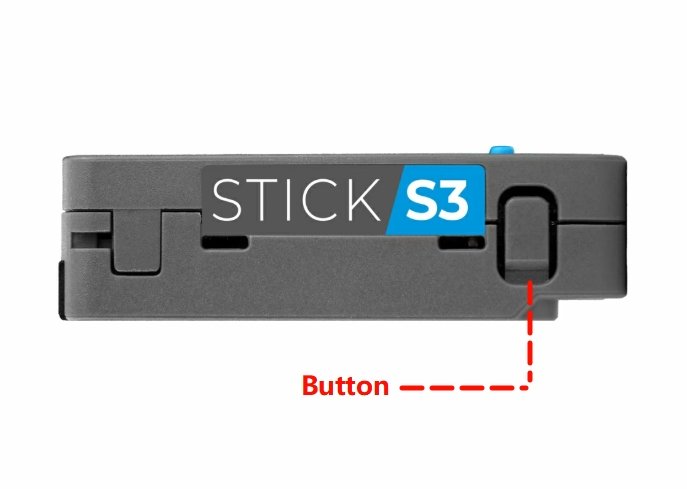
Pages are sized for typical 8.5×11 or A4 print at readable type size. Some sections are dense — print at 100% scale, not “fit to page”.
12.2 Hardware quick-facts panel
┌──────────────────────────────────────────────────────────────┐
│ M5Stack M5StickS3 — K150                                     │
├──────────────────────────────────────────────────────────────┤
│ MCU       ESP32-S3-PICO-1-N8R8 (SIP) · LX7 dual @ 240 MHz    │
│           8 MB flash + 8 MB OPI PSRAM                        │
│           Wi-Fi 4 2.4 GHz · BLE 5.0 · Native USB-CDC         │
│ Display   1.14" 135×240 IPS · ST7789P3 · SPI                 │
│ Audio     ES8311 codec · MEMS mic 65dB · AW8737 amp · 1W spk │
│           ← THE STANDOUT FEATURE (Vol 5)                     │
│ IR        TX + RX (both — Cardputer ADV is TX only)          │
│ IMU       6-axis (BMI270 or MPU6886 — verify on hardware)    │
│ Buttons   Programmable A + B + power                         │
│ Storage   No on-board microSD (Hat2 add-on for SD)           │
│ Battery   250 mAh LiPo · USB-C charge                        │
│           ← THE LIMITING FACTOR (Vol 11 § 4)                 │
│ Expansion 1× Hat2 16-pin (top) + 1× HY2.0-4P Grove (side)    │
│ Form      48 × 24 × 15 mm · 20 g · MAGNETIC BACK             │
└──────────────────────────────────────────────────────────────┘

Most-common first-time mistake: wrong USB device path.
M5StickS3 uses /dev/ttyACM0 (native USB-CDC), NOT /dev/ttyUSB0.

Most-common build-flag mistake: missing OPI PSRAM flag.
Add: board_build.arduino.memory_type = qio_opi
12.3 Pinout one-page reference
Critical GPIOs (verify against M5Unified source on hardware):
Table 1 — Critical GPIOs (verify against M5Unified source on hardware)
| GPIO | Function |
|---|---|
| 0 | BOOT button — hold during USB plug-in for download mode |
| 1, 2 | Grove TX/RX (UART) or secondary I²C SCL/SDA |
| 8, 9 | Primary I²C SDA/SCL (codec + IMU + Hat2 I²C) |
| 10 | Battery ADC |
| 13, 19, 21 | IR (TX + RX pins — verify) |
| 14 | SPI MOSI (shared display + Hat2) |
| 18, 19 | USB D-/D+ (native) |
| 39 | SPI MISO |
| 40 | SPI SCK |
| 41-43, 46 | I²S audio (ES8311) |
Grove HY2.0-4P (side):
Pin 1  Black   GND
Pin 2  Red     +5V (USB or boost; ~250-500 mA budget)
Pin 3  White   G2 (UART RX or I²C SDA when re-tasked)
Pin 4  Yellow  G1 (UART TX or I²C SCL when re-tasked)
Hat2 16-pin (top) — pinout TBD pending vendor PDF; expected layout per Vol 3 § 4:
1   3V3      2   5V         3   GND       4   GND
5   RESET    6   INT        7   SDA       8   SCL
9   UART TX  10  MISO       11  SCK       12  MOSI
13  UART RX  14  CS         15  GPIO      16  GPIO
12.4 Firmware decision tree
What's the use case?
  ├─ Pentest             → Evil-M5Project (preferred — M5Stack-aware)
  │                         OR Bruce-for-stick (if S3-stick port good)
  │                         OR Marauder Cardputer port (PCAP best)
  ├─ Off-grid mesh       → N/A — no LoRa. Use Cardputer ADV + Cap LoRa-1262.
  ├─ Embedded dev        → Arduino + M5Unified or PlatformIO
  ├─ Block coding        → UiFlow 2 (M5Stack official)
  ├─ Home automation     → ESPHome
  ├─ Audio work          → Custom (Vol 10 § 5) + RHesus-RAdio + esp-now-talkie
  └─ Voice command       → esp-skainet integration
Recommended setup: M5Launcher on factory (if supports M5StickS3) + Evil-M5Project on ota_0 + audio firmware on ota_1.
12.5 Audio recipes quick-ref (the standout)
The M5StickS3’s differentiator. One-page summary of Vol 5 + Vol 9 § 4:
Table 2 — The M5StickS3's differentiator. One-page summary of [Vol 5](/m5stick-s3/vol-5/) + [Vol 9 § 4](/m5stick-s3/vol-9/#94-audio-recipes)
| Recipe | Firmware | Time-to-effect | Battery cost |
|---|---|---|---|
| Voice memo recorder | Custom (Vol 5 § 4) or MicroHydra | Immediate | ~95 mA → 2.5 hours |
| ESP-NOW walkie-talkie | esp-now-talkie | Two devices same channel | ~250 mA → 1 hour |
| Internet radio | RHesus-RAdio | Wi-Fi + URL | ~150 mA → 1.5 hours |
| Audio FFT visualization | m5Cardputer_audiospectrum (ported) | Real-time | ~120 mA → 2 hours |
| Wake-word detection | esp-skainet Multinet5 | <5% CPU continuous | ~85 mA → 3 hours (near-free) |
| Audio attack patterns (DTMF, etc.) | Custom firmware | Per recipe | Varies |
12.6 Battery-life realism table
Critical reference (from Vol 11 § 4):
Table 3 — Critical reference (from [Vol 11 § 4](/m5stick-s3/vol-11/#114-the-250-mah-battery-posture))
| Mode | Battery life (250 mAh) |
|---|---|
| Display only | ~5 hours |
| Wi-Fi scan | ~2 hours |
| Sustained TX-spam | ~50-60 minutes |
| Audio playback (full vol) | ~50 minutes |
| Audio recording | ~2.5 hours |
| Walkie-talkie | ~1 hour |
| Wake-word idle | ~3 hours |
Plan engagements <30 min for safety margin; <2 hr for scan-only.
For longer: USB-C tethered or external power bank.
12.7 Pentest quick-ref
Table 4 — 7. Pentest quick-ref
| Attack | Firmware | Menu path | M5StickS3-specific notes |
|---|---|---|---|
| Wi-Fi deauth | Evil-M5Project / Bruce | WiFi → Attack → Deauth | Same as Cardputer ADV; smaller battery limits duration |
| Beacon spam | Evil-M5Project / Bruce | WiFi → Attack → Beacon Spam | iOS UI denial works the same |
| Evil Portal | Evil-M5Project / Bruce | WiFi → Evil Portal | Smaller screen for status display |
| EAPOL capture | Marauder port (if S3-stick) | WiFi → Sniffer → EAPOL | Better on Cardputer ADV |
| Sour Apple BLE | Bruce (if S3-stick port) | BLE → BLE Spam → Sour Apple | Same Apple Continuity flood |
| Mifare crack | Bruce + Unit RFID2 Grove | RFID → Mifare | Need Unit RFID2; no on-board NFC |
| CC1101 sub-GHz | Bruce + CC1101 Grove Unit | SubGHz | Need CC1101 Grove |
| IR TV-B-Gone | Evil-M5Project | IR → TV-B-Gone | M5StickS3 has IR TX |
| IR remote learning | Evil-M5Project | IR → Learn | M5StickS3-unique (Cardputer ADV is TX-only) |
| BadUSB | BadCard / M5Launcher | Files → BadUSB → Run | Small form-factor advantage for covert plug-in |
12.8 Hat + Unit family compatibility one-page
Memorize this table to avoid the most-common shopping mistake:
Table 5 — Memorize this table to avoid the most-common shopping mistake
| Connector | M5Stack family | Pin count | Physical |
|---|---|---|---|
| Hat2 16-pin | M5StickS3 | 16 pin | 2.54 mm header (top) |
| HAT-original 8-pin | M5StickC family (classic ESP32) | 8 pin | Pogo connector (top) |
| Cap 14-pin EXT | Cardputer ADV only | 14 pin | 2.54 mm header (underside) |
| Atom 8-pin | Atom / Atom S3 family | 8 pin | Pogo (top) |
Cap LoRa-1262 does NOT fit M5StickS3. M5StickC HAT does NOT fit M5StickS3. Verify the physical connector before buying any accessory.
12.9 Flashing-method picker
Table 6 — 9. Flashing-method picker
| Method | Best for | URL / command |
|---|---|---|
| Web flasher (UiFlow) | First install / known-good | https://uiflow.m5stack.com/ |
| Web flasher (Bruce) | Pentest install | https://bruce.computer/ |
| Web flasher (Evil-M5) | Pentest install (alternative) | linked from https://github.com/7h30th3r0n3/Evil-M5Project |
| M5Burner desktop | Fleet flashing or when Web Serial unavailable | https://docs.m5stack.com/en/download |
| esptool.py CLI | Scripting, CI, recovery | pip install esptool |
| OTA in-firmware | Updates once on Wi-Fi | Per-firmware UI |
Backup factory firmware FIRST:
esptool.py --chip esp32s3 -p /dev/ttyACM0 -b 1500000 \
    read_flash 0 0x800000 m5sticks3_backup.bin
12.10 Regional Wi-Fi/BLE rules
Table 7 — 10. Regional Wi-Fi/BLE rules
| Region | Frequency | Max EIRP | Notes |
|---|---|---|---|
| US (FCC §15.247) | 2400-2483 MHz | +30 dBm typical limit | Wi-Fi devices typically +14-+20 dBm |
| EU (ETSI EN 300 328) | 2400-2483.5 MHz | +20 dBm | Strict |
| JP (ARIB STD-T66) | 2400-2483.5 MHz | +20 dBm | Similar to EU |
M5StickS3 at +20 dBm is universally legal in 2.4 GHz ISM. No EIRP-compliance gotcha like Cap LoRa-1262.
No LoRa on M5StickS3 — no LoRa region rules apply.
12.11 Audio-bug legal quick-ref (the load-bearing section)
Most-important reference for operators using audio recording features:
US states with two-party consent (recording without all parties’ consent = criminal felony):
CA, FL, IL, MD, MA, MT, NV, NH, PA, VT, WA
Other 39 US states: one-party consent (operator’s consent suffices).
EU + UK: GDPR / national laws — recording voice without lawful basis = violation with potential criminal exposure.
Operational rule: document authorization, time-box, sanitize. The M5StickS3 can record audio covertly; the operator must not, except under explicit authorization.
Bench / private spaces: legal everywhere. Engagement work: authorization required.
12.12 Common build / flash errors
Table 8 — 12. Common build / flash errors
| Symptom | Fix |
|---|---|
| PSRAM not detected | Add board_build.arduino.memory_type = qio_opi to platformio.ini |
| Device not found at /dev/ttyUSB0 | M5StickS3 uses /dev/ttyACM0 (USB-CDC native) |
No chip detected in esptool | Hold Button A during USB plug-in for download mode |
| Display init fails | Use M5Unified; if raw driver, specify ST7789P3 (not V2) |
| Audio not working | Initialize via M5Unified M5.config() + M5.begin(cfg) |
| Flash succeeds, BLACK SCREEN | Wrong silicon target (used StickC Plus 2 binary) — reflash with M5StickS3-specific binary |
| Brownout reboot loop | Better USB cable; fresh battery; lower audio volume; relax brownout threshold |
| USB Serial output empty | Add -DARDUINO_USB_CDC_ON_BOOT=1 to build_flags |
12.13 Troubleshooting flow
Device won't boot?
    │
    ├─ Black screen → Press Button A while plugging USB (force download mode)
    │                 → If still nothing: esptool erase_flash + factory restore
    │
    ├─ Display on, looping → Settings → About → reads version?
    │                        Yes → app issue, reflash known-good firmware
    │                        No  → bootloader issue, mask-ROM recovery
    │
    └─ Charges but won't power on → Long-press power button (>2 sec)
                                    Short-press to wake from sleep

No scan results?
    │
    ├─ Wi-Fi scan empty   → Region setting matches venue?
    │                       → Antenna OK (PCB trace inside Stamp-S3A)?
    │                       → Channel-hop mode on, not stuck on one ch?
    │
    └─ BLE scan empty     → BLE radio enabled?
                            → No interfering Wi-Fi traffic?

Audio not playing / recording?
    │
    ├─ Speaker silent     → Volume > 0? Check M5.Speaker.setVolume()
    │                       → ES8311 initialized? Need M5.begin(cfg)
    │
    └─ Mic captures silence → Mic gain set? esp_codec_dev_set_in_gain()
                              → Initialize ES8311 input path explicitly

Battery dies fast?
    │
    └─ Expected — 250 mAh is small. Plan for <2 hr active operation.
       For sustained: USB-C tether or power bank.

hashcat says "No hashes loaded"?
    │
    └─ Run hcxpcapngtool first to convert PCAP → .hc22000 format
12.14 Pre-engagement checklist (one-page)
Print this. Tape inside gear bag.
- Written authorization signed and dated
- RF coverage scope specified
- Attacks permitted listed
- Audio recording authorization documented separately if audio in scope
- Two-party-consent state check done if US recording
- Battery charged (≥ 90% if engagement > 30 min; ≥ 50% if shorter)
- SD-via-Hat2 if equipped + fresh storage
- Firmware version locked (tag, not master)
- Region setting matches venue
- Target BSSID(s) configured if surgical attacks planned
- MAC randomization enabled
- Capture destination plan
- Sanitization plan post-engagement
- Bystander mitigation (narrow targeting; no broadcast in public)
- Discovery response: stop, produce authorization, document
- Out-of-band channel prepared for security to reach me
If any item isn’t checked, abort.
12.15 Key references in one block
Upstream
- M5Stack M5StickS3 product page: https://shop.m5stack.com/products/m5sticks3-esp32s3-mini-iot-dev-kit
- M5Stack docs: https://docs.m5stack.com/
- M5Cardputer library (also for M5StickS3): https://github.com/m5stack/M5Cardputer
- M5Unified: https://github.com/m5stack/M5Unified
- M5GFX: https://github.com/m5stack/M5GFX
- M5Burner: https://docs.m5stack.com/en/download
Firmware
- Evil-M5Project: https://github.com/7h30th3r0n3/Evil-M5Project
- Bruce: https://github.com/BruceDevices/firmware · https://bruce.computer/
- ESP32 Marauder: https://github.com/justcallmekoko/ESP32Marauder
- MicroHydra: https://github.com/echo-lalia/MicroHydra
- ESPHome: https://esphome.io/
- UiFlow 2: https://flow.m5stack.com
Audio-specific
- esp-skainet (wake-word + AI): https://github.com/espressif/esp-skainet
- esp_codec_dev (audio framework): https://github.com/espressif/esp-adf
- esp-now-talkie (community): GitHub search
- RHesus-RAdio (community): GitHub search
Tools
- esptool: https://github.com/espressif/esptool
- hashcat: https://hashcat.net/hashcat/
- hcxtools: https://github.com/ZerBea/hcxtools
- PlatformIO: https://platformio.org/
Datasheets
- ESP32-S3: https://www.espressif.com/sites/default/files/documentation/esp32-s3_datasheet_en.pdf
- ST7789P3: Sitronix
- ES8311: https://www.everest-semi.com/
- AW8737: Awinic
- BMI270 IMU: https://www.bosch-sensortec.com/products/motion-sensors/imus/bmi270/
Regulatory
- US FCC §15.247: https://www.fcc.gov/general/title-47-code-federal-regulations
- US CFAA: https://www.law.cornell.edu/uscode/text/18/1030
- US Wiretap Act: https://www.law.cornell.edu/uscode/text/18/2510
- EU GDPR: https://gdpr.eu/
- UK Computer Misuse Act: https://www.legislation.gov.uk/ukpga/1990/18
Community
- Cardputer Wiki (much applies): https://cardputer.wiki
- r/m5stack (Reddit)
- M5Stack Discord (linked from m5stack.com)
- M5Stack community forum: https://community.m5stack.com/
Hack Tools cross-references
../../../_shared/comparison.md— cross-tool decision matrix- the capability matrix — sortable matrix
../../../_shared/legal_ethics.md— Hack Tools shared posture../../../M5Stack Cardputer ADV/03-outputs/Cardputer_ADV_Complete.html— sibling deep dive (most content carries forward)../../../ESP32 Marauder Firmware/03-outputs/ESP32_Marauder_Firmware_Complete.html— platform-neutral Marauder
This is the final volume of the M5Stack M5StickS3 12-volume series.
Comments (0)